
The Evolution of AI Models for Achieving Brand Consistency in Advertising

Updated: Apr 21
Artificial intelligence has transformed many industries, and advertising is no exception. Over the past decade, AI models have evolved from simple automation tools to sophisticated systems capable of generating tailored content that aligns closely with brand identity. This shift marks the end of generic, "stock" looks in advertising and opens the door to highly customized, consistent brand experiences powered by AI.
The Rise of AI Models and Brand Consistency in AI-Powered Advertising
AI models began as basic algorithms designed to automate repetitive tasks like ad placement and keyword bidding. Early natural language processing (NLP) models could generate simple text, but their outputs often lacked nuance and brand voice. As machine learning advanced, large language models (LLMs) such as OpenAI’s GPT series and Google’s BERT introduced a new level of understanding and creativity.
These models learned from vast datasets, enabling them to produce content that mimics human writing styles. Brands started experimenting with AI-generated copy, images, and video scripts to speed up content creation. However, the challenge remained: how to maintain a consistent brand voice and visual identity across all AI-generated materials.
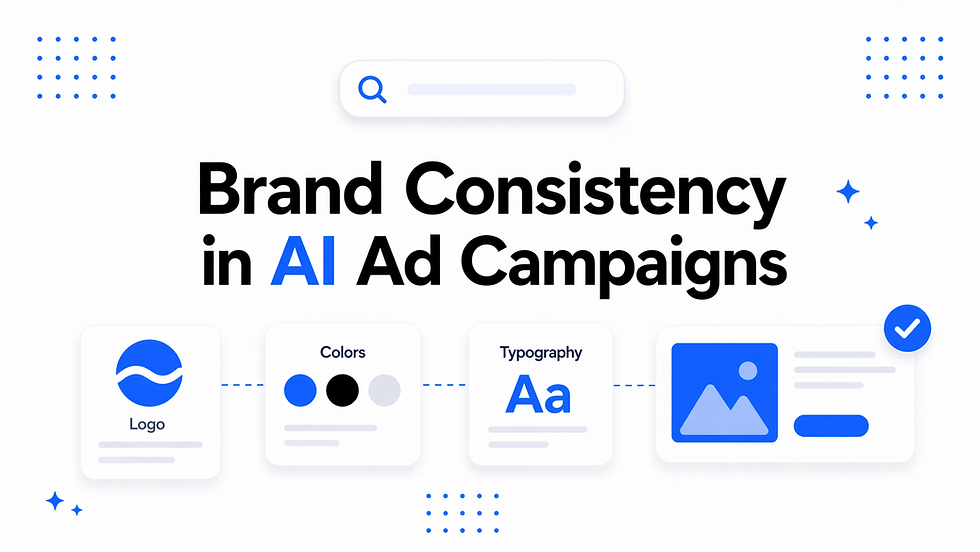
How AI Tools Support Brand Consistency
Brand consistency means delivering a unified message and visual style across all channels. AI tools now help brands achieve this by:
Customizing language and tone: AI models can be fine-tuned on brand-specific content, ensuring the generated text reflects the brand’s personality and values.
Maintaining visual style: AI-powered design tools generate images and videos that follow brand guidelines, including color palettes, fonts, and imagery style.
Automating quality control: AI systems can flag content that deviates from brand standards, reducing human error and speeding up review processes.
Examples from Different Large Language Models
OpenAI’s GPT-4: Many brands use GPT-4 fine-tuned on their marketing materials to generate blog posts, social media captions, and email campaigns that sound authentic and aligned with their voice.
Google’s Bard: Bard integrates with Google’s ecosystem, allowing brands to pull in real-time data and maintain up-to-date, consistent messaging across platforms.
Anthropic’s Claude: Known for its safety features, Claude is used by brands that prioritize ethical messaging and want AI to adhere strictly to brand values and compliance requirements.
These models demonstrate how AI can be adapted to meet specific brand needs, moving beyond generic outputs to highly tailored content.
The Status of Customer-Trained AI Models in 2026
By the year 2026, customer-trained AI models have firmly established themselves as a mainstream tool in the realm of advertising and marketing strategies. This transformative shift indicates a significant departure from the traditional reliance on off-the-shelf AI solutions that many brands previously utilized. Instead, forward-thinking companies are now making substantial investments in the development and training of their own AI models, leveraging proprietary data that encompasses a variety of sources. This data includes not only insights from past advertising campaigns but also detailed records of customer interactions and comprehensive product information that reflects the brand's unique offerings and values.
Such an approach to AI model training brings with it a multitude of advantages that can greatly enhance a brand's marketing effectiveness and overall customer engagement:
Deeper brand alignment: One of the primary benefits of using internally trained AI models is their ability to grasp the intricate nuances of a brand's identity. Unlike generic models that are designed to serve a broad audience, customer-trained AI models can understand and interpret the subtleties that define a brand's voice, values, and personality. This deep alignment ensures that all marketing efforts resonate authentically with the target audience, fostering a stronger emotional connection between the brand and its customers.
Improved personalization: Another significant advantage of customer-trained AI is its capacity for enhanced personalization. These models are adept at analyzing customer data to create tailored content that speaks directly to specific audience segments. By doing so, brands can deliver highly relevant messaging that not only captures attention but also drives engagement and conversion. Importantly, this personalization is achieved while maintaining brand consistency across various channels, ensuring that the core message remains intact regardless of how it is presented.
Faster adaptation: In the fast-paced world of marketing, the ability to adapt quickly is crucial. Brands that utilize customer-trained AI can swiftly update their models to incorporate new campaigns, product launches, or shifts in brand strategy. This agility allows them to respond to market trends and customer feedback in real time, ensuring that their marketing efforts remain relevant and effective in an ever-changing landscape.
To illustrate the practical application of these advantages, consider the example of a global apparel brand that employs a custom-trained AI model to generate localized marketing content. This model is designed to respect and reflect cultural differences while still preserving the core voice of the brand. Such an approach not only enhances the relevance of the marketing material but also demonstrates the brand's commitment to understanding and valuing its diverse customer base.
Similarly, another tech company has harnessed the power of AI to create consistent product descriptions across dozens of languages. This ensures that the brand message remains clear and coherent worldwide, effectively bridging language barriers and enhancing the customer experience. By utilizing customer-trained AI models, these companies are not only improving their operational efficiency but also elevating the quality and impact of their marketing efforts on a global scale.
Looking Ahead: The Future of AI in Brand Consistency
The future of AI in advertising points toward even greater integration and sophistication, promising to revolutionize the way brands connect with their audiences:
Multimodal AI models will combine text, images, audio, and video generation in one unified system, allowing brands to create fully cohesive campaigns from a single AI platform. This integration will enable marketers to develop content that is not only visually appealing but also contextually relevant, ensuring that every element of the campaign works harmoniously. By harnessing the power of advanced algorithms, these multimodal systems will analyze user engagement data to tailor creative outputs that resonate with specific target demographics, ultimately enhancing the overall effectiveness of advertising efforts.
Real-time brand monitoring will leverage AI technology to continuously scan the vast expanse of the internet and social media platforms, alerting brands to inconsistent or off-brand content that may arise. This proactive approach will enable companies to address potential issues swiftly, maintaining their brand integrity and fostering trust with consumers. By utilizing sentiment analysis and trend detection, brands will not only respond to negative feedback more effectively but also identify opportunities for engagement and dialogue with their audience, creating a more dynamic and responsive brand presence.
Collaborative AI tools will be designed to work in tandem with human creatives, enhancing the creative process by offering intelligent suggestions and automating routine tasks that can often be time-consuming. These tools will allow creative teams to focus on high-level strategic decisions while the AI handles repetitive elements such as data analysis and preliminary content generation. As a result, the collaboration between human ingenuity and AI efficiency will lead to innovative advertising strategies that are both imaginative and data-driven, pushing the boundaries of what is possible in the creative landscape.
Ethical AI frameworks will become standard practice in the industry, ensuring that AI-generated content respects principles of diversity, inclusivity, and legal standards. As brands increasingly rely on AI for their advertising needs, it will be essential to implement guidelines that prevent biases and promote fair representation. These frameworks will not only protect brands from potential backlash but will also contribute to a more equitable advertising environment, where all voices and perspectives are valued and represented. This commitment to ethical standards will resonate with consumers, who are becoming more discerning about the brands they choose to support.
Brands that embrace these advances will stand out in a crowded marketplace by delivering consistent, authentic experiences that resonate deeply with their audiences. The era of generic stock content is fading, replaced by AI-powered creativity that reflects each brand’s unique identity. By leveraging the capabilities of sophisticated AI tools, companies will be able to craft personalized narratives that engage consumers on a deeper level, forging stronger emotional connections. As a result, the future of advertising will not only be about selling products but also about creating meaningful relationships with consumers, fostering brand loyalty in an ever-evolving digital landscape.
Frequently Asked Questions (FAQ)
Why is brand consistency important in AI-driven advertising?
Brand consistency ensures that messaging, tone, visuals, and positioning remain aligned across all touchpoints. In AI-driven environments—where content is generated dynamically—consistency is critical to maintaining trust, recognition, and brand equity.
How are AI models used in advertising today?
AI models are used to generate copy, visuals, video, and even full campaign concepts. They also help optimize targeting, personalize messaging at scale, and analyze performance data in real time.
What challenges do brands face with AI-generated content?
Common challenges include:
Inconsistent tone or messaging across outputs
Loss of brand voice and identity
Variations in visual style
Lack of control over how content is generated
These issues become more pronounced as content production scales.
How have AI models evolved to support brand consistency?
Modern AI models can be guided with structured inputs such as brand guidelines, tone-of-voice frameworks, and style references. They also support fine-tuning, prompt engineering, and system-level controls to produce more consistent outputs.
What role do brand guidelines play in AI-generated content?
Brand guidelines act as the foundation for AI systems. When properly integrated, they ensure that every generated asset—whether text, image, or video—aligns with the brand’s identity and communication standards.
What is prompt engineering in the context of brand consistency?
Prompt engineering involves crafting detailed instructions that guide AI outputs. By embedding brand voice, tone, and messaging rules into prompts, teams can achieve more predictable and aligned results.
Can AI maintain consistency across multiple channels?
Yes. When properly configured, AI can adapt content for different channels (social, web, video, AI platforms) while maintaining a consistent core message and identity.
How do companies operationalize AI for consistent advertising?
Leading brands build systems that include:
Centralized brand guidelines and knowledge bases
Approved prompts and templates
Human review and quality control workflows
Continuous performance feedback loops
How do you measure brand consistency in AI-generated campaigns?
Key indicators include:
Alignment with brand voice and tone
Visual and messaging consistency across assets
Audience perception and sentiment
Performance consistency across channels
What is the future of AI and brand consistency in advertising?
The future lies in fully integrated AI ecosystems where brand rules, creative assets, and performance data are continuously connected. This will enable brands to scale content production while maintaining a cohesive and recognizable identity.


