The iPhone Duo Just Changed the Rules for Video Content and Marketing - Is Your Brand Ready?

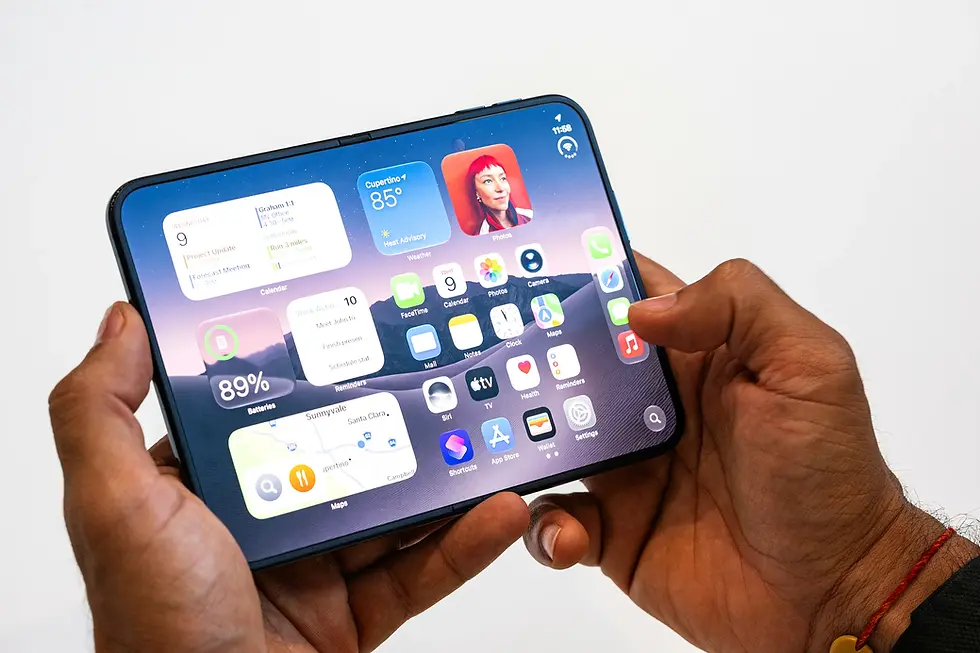
Apple just did something it hasn't done in over a decade: it changed the physical shape of the iPhone. Today, at its "Surprise and Shine" event, Apple unveiled the iPhone Duo - its first-ever foldable iPhone - and the internet has been in a frenzy ever since.
If you're a brand, marketer, or content creator, the headlines about specs and pricing aren't the story. The real story is this: a new screen format just entered hundreds of millions of pockets, and most brands' video content isn't built for it.
Here's what's actually happening, and what it means for how your brand should be shooting, editing, and distributing video over the next 12 months.

iPhone Duo Specs, Price & Release Date: What Apple Announced
Quick facts, for context:
Form factor: A notebook-style foldable - not a clamshell like Samsung's Z Flip. It opens like a book into one continuous screen.
Displays: A 7.6" inner display and a 5.4" outer display, both Super Retina XDR.
Chip: Apple's new A20 Pro, paired with the C2 modem for 5G.
Camera: 48MP Fusion main camera.
Multitasking: Apple is positioning "parallel" app use - running two apps side-by-side across the fold - as a headline feature, not a gimmick.
Apple Pencil support is coming later this year over USB-C.
Colors: Star White and Night Sky.
Price: Starts at $1,999 for 256GB.
Availability: Preorders open October 16, with the device shipping October 23.
At $1,999, this isn't a mass-market device on day one - but neither was the original iPhone, AirPods, or Apple Watch. Foldables have historically previewed where an entire product category goes next, and Apple entering the space is the signal that dual-screen and flexible-display experiences are about to go mainstream.

Why the iPhone Duo Matters for Marketers, Not Just Tech Reviewers
Every product launch generates a spec-sheet news cycle. This one is different because it directly changes how content gets watched.
Here's the shift:
1. A new "canvas" for video just shipped
For 15+ years, mobile video creative has been designed around one shape: a single rectangular screen, usually vertical for social. The iPhone Duo introduces:
A continuous unfolded widescreen canvas (great for cinematic, landscape-first storytelling)
A split-screen, dual-context canvas (two apps or two pieces of content, side by side)
A compact outer-screen format for glanceable, short-form content
Brands that only ever export one 9:16 vertical cut of their video are going to look outdated on this device almost immediately - the same way non-responsive websites looked outdated the moment smartphones went mainstream.
2. "Parallel" multitasking changes attention, not just screen size
Apple isn't just giving people a bigger screen - it's explicitly designing for users to run two things at once. That means your video ad, product demo, or brand story might be competing for attention next to another open app in the exact same field of view, not just before or after it. Content that's slow to state its point, or that relies on full-screen immersion to land, loses more attention on a split screen than it would on a single phone screen.
3. Hype cycles are short - but leave a long content trail
Every foldable-phone reaction video, unboxing, comparison, and "should you buy it" post is happening in the content ecosystem right now. Brands that create genuinely useful, well-produced content tied to this news cycle in the next 1–3 weeks will ride real search and social volume. Brands that wait until Q1 will be publishing "hot takes" on a six-month-old device.

What Brands Should Do About the iPhone Duo Launch
This isn't a call to panic-rebuild your entire video library. It's a call to get ahead of a format shift before your competitors do. Concretely:
Audit your existing video assets for foldable/dual-screen readiness
Most brand video libraries are built exclusively for 16:9 (YouTube/web) and 9:16 (Reels/TikTok/Shorts). Almost none are built with:
A landscape unfolded cut that takes advantage of extra horizontal real estate
Split-attention pacing - key messages and CTAs that land even if only half the frame is getting full attention
Compact "outer screen" edits - think 5–10 second loopable brand moments
Rethink your product demo and explainer content
If you sell a product or a service with any kind of interface, dashboard, or app component, a device that runs two apps side-by-side is a genuine opportunity: show your product working alongside the tools your customer already uses. That's a demo format that didn't really exist before today.
Get in front of the news cycle with owned content
This is the fastest, lowest-cost play. A well-produced short video - "What the iPhone Duo Means for [Your Industry]" - published this week has a real shot at organic reach purely because of search and social volume around the term "iPhone Duo" right now. That volume drops off fast; the brands that move first win disproportionately more attention.
Start testing dual-format creative now, even before adoption is mainstream
Foldables won't be the majority of phones overnight. But Apple entering the category means every major brand and platform (Instagram, TikTok, YouTube) will start optimizing their players and ad formats for foldable and split-screen viewing within the next year. Getting your creative team fluent in these formats now - while it's novel and cheap to test - is a lot easier than retrofitting a whole content strategy later.

iPhone Duo Video Content Ideas for Brands
Once you stop thinking of the Duo as "a bigger iPhone" and start thinking of it as two connected canvases, a whole set of formats opens up that simply didn't exist on a single rectangular screen. Here are concrete production styles brands can start testing now:
1. Split-screen storytelling
Use the fold itself as a visual device. Two related storylines, two perspectives, or a before/after, running simultaneously on each half of the screen and resolving into one moment when the phone is unfolded.
Example: A skincare brand shows "morning routine" on one half and "results after 30 days" on the other, syncing at the reveal.
Example: A restaurant brand runs "kitchen" on one side and "table" on the other - prep and payoff, side by side.
2. "Reveal on unfold" creative
Treat the physical act of opening the phone as a narrative beat. Content is intentionally cropped or partial on the outer screen and only makes full sense - or delivers a punchline, product reveal, or twist - once unfolded.
Works especially well for product drops, teaser campaigns, and app/feature launches.
3. Dual-context product demos
Since the Duo's headline feature is running two apps side-by-side, this is a genuine opportunity for any brand with a digital product: show your app or platform running alongside a tool the customer already uses (email, a calendar, a competitor's app, a spreadsheet).
This format didn't really exist as native creative before this device - it's a first-mover opportunity.
4. Compact "outer-screen" loops
Produce ultra-short (5–8 second), loopable, single-message brand moments designed for the smaller outer display - glanceable, sound-off-friendly, logo-forward. Think of it as the video equivalent of a favicon: brand recognition at a glance, not a full story.
5. Widescreen "unfolded" cinematic cuts
When fully open, the Duo behaves like a small widescreen display. This is a chance to produce a genuinely cinematic landscape cut of hero content - wide establishing shots, panning product reveals, environmental/lifestyle footage - rather than cropping a vertical video and losing the composition.
6. Comparison and "versus" formats
Split-screen is a natural fit for direct comparison content: your product vs. the old way of doing something, customer testimonial vs. footage of the result, spec vs. spec. This format is highly native to the device and highly shareable as "proof" content.
7. Interactive-feeling narrative ads
Even though video itself isn't literally interactive, you can simulate the feeling of choice by structuring content as two parallel paths (Option A / Option B) that a viewer mentally "picks" between, playing on the dual-screen concept without needing any special ad tech.
8. Behind-the-scenes / process content, split by role
For service and B2B brands: show two people on a team working on the same project at the same time, from two different angles (designer + developer, chef + server, strategist + editor). It reinforces "the full process" in a way a single-screen edit can't as elegantly.
Foldable Phone Creative Production Styles to Test Now
Beyond individual video ideas, a few broader creative approaches are worth building into your production pipeline while foldables are still novel and attention is high:
Diptych-style visual language - borrow from the art world's diptych/triptych tradition: two intentionally paired, contrasting or complementary images/scenes shown together. This maps directly onto a foldable's two-screen layout and reads as intentional, not gimmicky.
Asymmetric pacing - instead of one steady edit rhythm, cut faster on one "side" of the narrative and slower on the other, using the physical fold as a built-in scene transition.
Modular shoots - shoot content in a way that's designed to be recombined: one clean "single-screen" cut for standard social, plus B-roll and alternate angles specifically reserved for split-screen or dual-context edits. This avoids re-shooting for every format.
Sound-optional design - since outer-screen and glanceable content is likely to be viewed sound-off even more often than typical social video, lean harder into on-screen text, captions, and visual storytelling that doesn't rely on audio to land.
Format-agnostic hero content, format-specific cutdowns - produce one strong master asset per campaign, then intentionally edit distinct versions for vertical, widescreen-unfolded, split-screen, and outer-screen - rather than a single cut awkwardly resized four ways.
None of this requires a brand-new production process from scratch - it's a matter of planning multi-format delivery before the shoot, not after, so the split-screen and unfolded cuts feel native rather than retrofitted.

This Is Exactly the Kind of Shift Busylike Was Built For
At Busylike, we specialize in producing video and marketing content that doesn't just look good - it's built for how people are actually going to watch it. That means:
Multi-format video production - a single shoot, cut for vertical, horizontal, split-screen, dual-context, and short-loop formats from day one, so your team never has to choose between "made for the fold" and "made for everything else"
Reactive content strategy - spinning up timely, well-produced content around cultural and tech moments (like this one) fast enough to actually capture the search and social wave
Product and app demo video built for how modern devices are actually used - including side-by-side, multi-app contexts
Brand strategy for emerging formats - helping you decide where to invest now versus where to wait
The iPhone Duo won't be the last device to reshape how content gets consumed. Brands that treat every format shift as a content opportunity - instead of playing catch-up a year later - are the ones that end up owning the conversation.
Want to talk through what a foldable-ready (or just genuinely modern) video strategy looks like for your brand?
👉 Book a free strategy call with Busylike - we'll look at your current video assets and show you exactly where the gaps are.
Busylike is a video production and marketing agency helping brands create content built for how people actually watch today - not how they watched five years ago.