
YouTube Shorts Marketing: The 2026 Playbook

Your Shorts report looks healthy until the CMO asks the only question that matters: what did the channel do for the business? The team has views, likes, and a growing upload folder, but no agreed role for Shorts in the media plan. Meanwhile, long-form YouTube, search, and connected TV receive clear budgets, audiences, and conversion targets.
That gap is why many Shorts programs get defunded before they've been properly briefed. YouTube Shorts isn't an intern's publishing assignment or a virality contest. It's a full-funnel media surface that can create discovery, qualify interest, support long-form viewing, and contribute to conversion when creative, distribution, and measurement work together.
Table of Contents
What YouTube Shorts Marketing Actually Means - Assign Shorts a job at every funnel stage
Who Watches Shorts and When the Format Fits - Use cases that earn a place in the plan
Creative and Production Playbook That Holds Attention - Build the cut around retention - Batch production beats one-off posting
Distribution, Shorts Ads, and Paid Amplification - Shorts placement decisions
KPIs and Measurement Beyond Views - Establish a reporting rhythm
Governance, Workflow, and Your 90-Day Scale-Up Plan - Days 1 to 30 - Days 31 to 60 - Days 61 to 90
Why YouTube Shorts Deserves a Real Marketing Plan in 2026
YouTube Shorts has reached a scale that makes casual experimentation an inadequate operating model. Independent 2026 market summaries report more than 200 billion daily Shorts views worldwide and around 2 billion monthly users. One analysis says Shorts now outpaces TikTok and Instagram Reels on monthly reach, while several summaries report that 74% of Shorts views come from non-subscribers, making the format particularly relevant for prospecting. These figures are compiled in 2026 YouTube Shorts market data.
That reach changes the budget conversation. A feed with this level of activity can expose audiences to multiple hooks, product demonstrations, creator voices, and calls to action without requiring an existing subscriber base. Treating it as a secondary content task leaves a major discovery environment outside the media strategy.
Shorts also has a clear place in YouTube's product history. The format launched in 2020, then expanded from about 30 billion daily views in 2021 to roughly 50 billion in 2022, around 70 billion in early 2024, and more than 200 billion daily views by 2026, according to YouTube Shorts historical benchmarks. The important point isn't the growth curve alone. It's that audience behavior has formed around the format, so brands can plan an ongoing program instead of betting on a temporary feature.
Budget rule: Fund Shorts as a distribution channel with a defined job, not as a volume of videos waiting for a lucky spike.
The business case should sit between paid social and long-form YouTube. Shorts can find new viewers, while long-form can carry the deeper proof, comparison, demonstration, or brand story. The feed can support both paid and organic work, but only if the team agrees on how viewers move from one surface to the next.
By the end of the planning process, your team should be able to define a full-funnel brief, select the right creative and ad approach, establish a production cadence, and report outcomes that withstand finance scrutiny. The question isn't whether Shorts can generate views. The question is which business outcome those views are supposed to influence.
What YouTube Shorts Marketing Actually Means
YouTube Shorts marketing is the planned use of vertical, short-form videos within the Shorts feed and connected YouTube experience to acquire, engage, and convert audiences. It combines organic publishing, creator partnerships, paid amplification, audience development, and measurement.
That definition matters because Shorts shouldn't be managed as an isolated social channel. YouTube owns both the fast, swipe-based feed and the long-form environment where viewers watch explainers, reviews, product demos, interviews, and customer stories. A viewer who discovers a brand through a quick Short may later encounter its longer content, search result, or retargeting ad. The channel architecture gives marketers more routing options than a single-feed strategy.
Shorts also demands different execution from TikTok and Reels. The audience, context, recommendation systems, creative norms, and buying tools aren't identical. Shorts inventory is purchased through Google Ads, and the format must fit a full-screen mobile environment. Teams should plan creator disclosures and attribution on YouTube campaigns as part of the operating model, not add them after production.
Assign Shorts a job at every funnel stage
Discovery: Use creator-led demonstrations, category hooks, cultural moments, and problem-first creative to reach people who don't know the brand.
Consideration: Answer one question, resolve one objection, or show one product behavior. A Short should make the next step obvious, often a longer YouTube video.
Conversion: Retarget engaged viewers with product proof, offer-led creative, long-form pre-roll, or a site visit objective. The Short creates the prompt, while another surface can carry the decision.
Shorts marketing is not a substitute for a healthy YouTube channel. It also isn't a vanity program measured by raw views. A high-view clip that sends no qualified audience to the next experience may be useful for awareness, but it shouldn't automatically receive more budget.
Who Watches Shorts and When the Format Fits
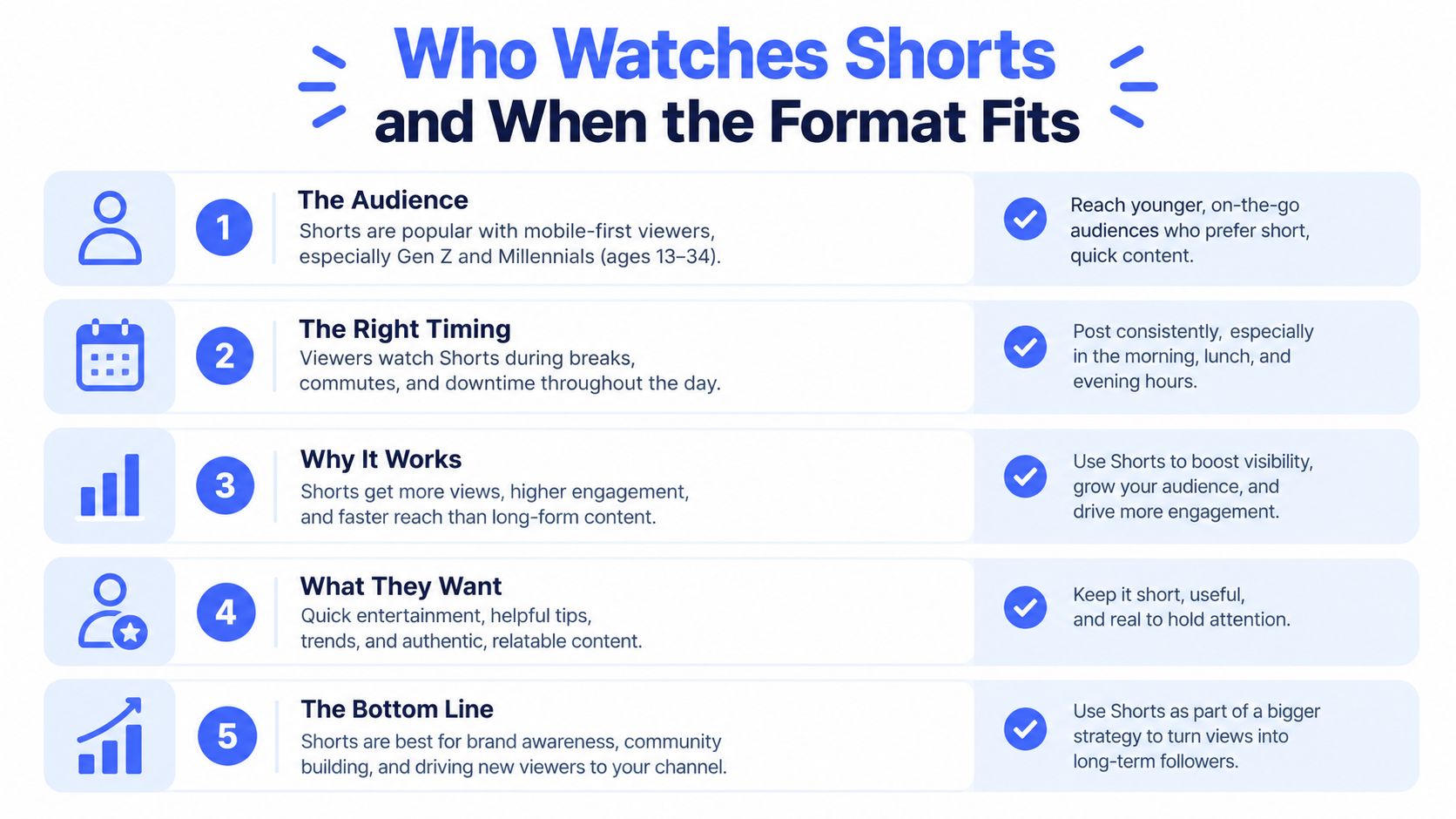
The strongest Shorts plan starts with audience behavior, not platform enthusiasm. The format is especially useful for mobile-first discovery, creator-led acquisition, quick education, and content that can resolve a question without a long setup. It's less useful when the viewer needs extensive evidence before taking action.
Shorts can reach younger adults effectively, while its audience is also broadening beyond the youngest segment. It overlaps with YouTube's long-form audience, which gives brands a practical bridge between quick discovery and deeper viewing. The format also travels well across markets. One 2026 industry summary reports that 75% of Shorts views originate outside the creator's country, a pattern documented in international YouTube marketing data. That makes localization a planning requirement, not a late translation task.
Use cases that earn a place in the plan
Creator-led acquisition is a strong fit when the product benefits from demonstration, personal testimony, styling, reaction, or practical use. A creator can make the opening feel native to the feed while giving the brand a credible reason to appear.
Low-consideration products can use Shorts to answer a simple need quickly. Retail, food, personal care, consumer electronics accessories, and everyday services often have a clear visual payoff that fits the format.
Episodic content works when each clip creates a reason to watch the next one or move into a related long-form video. The series needs a consistent promise, not random clips tied together by a playlist.
Reactive and event-driven creative can justify fast production when timing affects relevance. The trade-off is governance. Legal, brand, and creator approvals must be designed for speed.
Complex B2B journeys, high-ticket purchases, and evergreen brand films usually need more room for trust-building. Shorts can introduce the problem or create a retargeting audience, but it shouldn't carry the entire argument.
Use this fit check before approving budget:
Can the product benefit from a visible, immediate demonstration?
Is the consideration journey short enough for a quick first interaction?
Does the target audience use YouTube for discovery and learning?
Does the brand have long-form content or a landing experience ready for the next step?
Can the team localize hooks, captions, offers, and landing pages for international viewers?
If two or more answers are negative, Shorts probably shouldn't lead the plan.
Creative and Production Playbook That Holds Attention
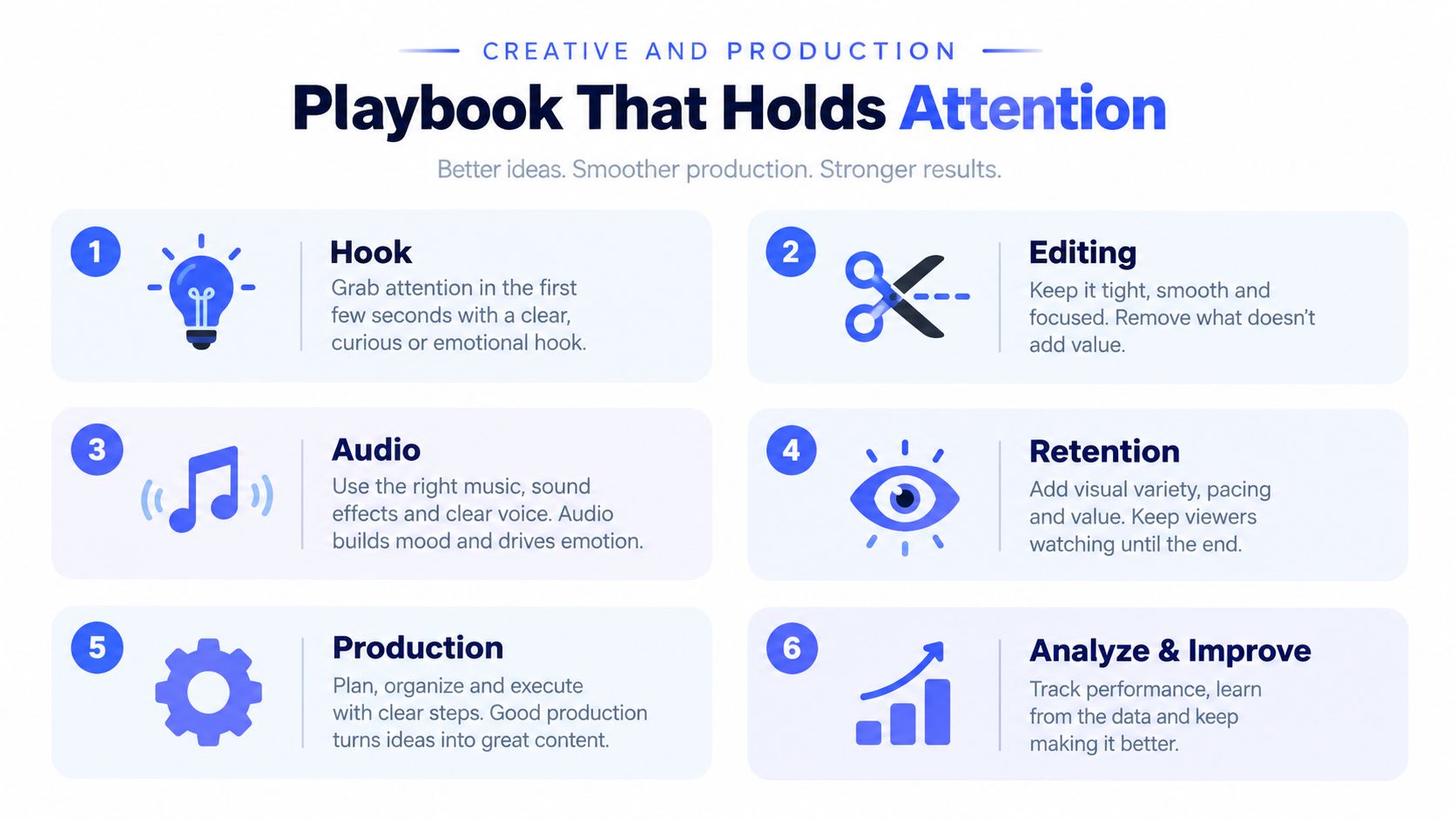
A Short earns its next two seconds before the viewer understands the brand. Open with the problem, promised outcome, surprising visual, or human reaction. Cut slow logo reveals, greetings, and abstract setup. They spend the highest-value moment before the audience has a reason to stay.
Use the quality gates defined earlier to judge the edit, not to promise media delivery. If retention falls before the viewer reaches the proof, revise the opening, pacing, or claim before increasing spend.
Build the cut around retention
Write each script in modules:
Hook: Show the problem or outcome immediately. “Your current setup is wasting space” gives the viewer a reason to continue before any brand introduction.
Proof: Demonstrate the product, answer the question, or show the transformation. Remove background information that delays evidence.
Payoff: Deliver the promised value early. The useful point should not depend on watching to the final frame.
Next action: Direct the viewer to a product page, related long-form video, creator profile, or follow-up Short.
Loop or open question: Close with a visual or verbal reset that encourages another view or creates a clear reason to continue.
Produce vertical-first at 9:16, using 1080 × 1920 pixels as the common delivery specification. Full-screen mobile viewing punishes horizontal framing, small text, and long introductions. For operational guidance on vertical delivery and action-oriented durations, use YouTube advertising specifications.
Keep important text inside the platform's visible safe areas. Burn in captions because viewers may watch without sound, then limit each caption beat to one idea. Use high contrast and establish a clear brand cue early enough for the audience to remember who made the video.
Batch production beats one-off posting
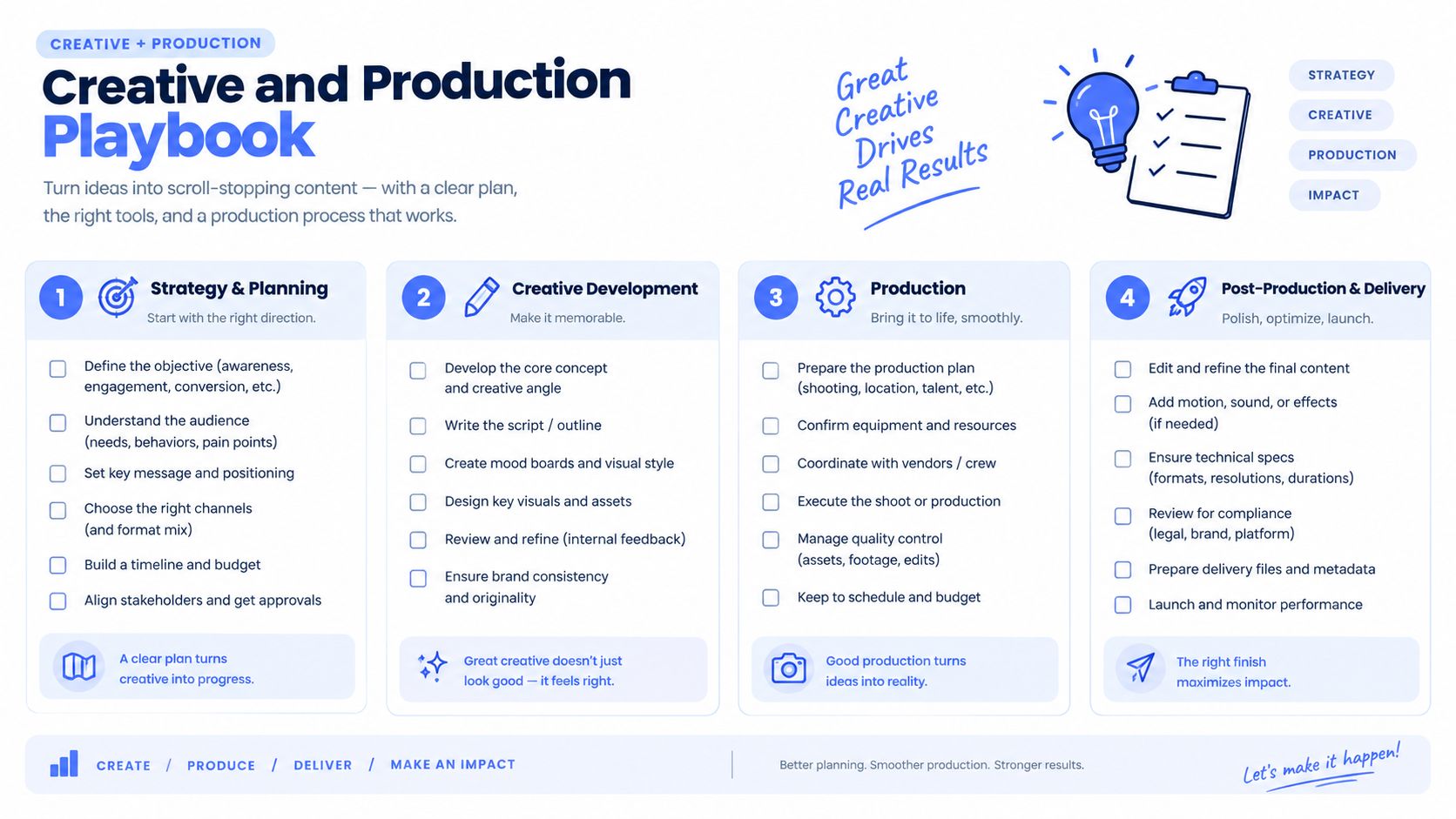
Build each shoot around a full-funnel brief, not a single viral attempt. Capture alternate openings, creator reactions, product angles, proof points, and calls to action while the setup is live. The editor can assemble an organic master cut, shorter variants, paid versions, and retargeting assets without restarting production.
The paid lead and producer should review the first batch together. Check hook visibility, text contrast, audio clarity, brand presence, CTA placement, and the point where viewers begin leaving. If the clip loses attention before its proof appears, change the edit before changing the media target.
Assign one owner for claims, approvals, naming, and version control when Shorts run beside long-form YouTube. That governance prevents an approved offer, caption, or brand cue from drifting across organic and paid cuts.
Production rule: Don't scale a weak opening with media spend. Scale the version that makes the value obvious before the viewer has a reason to swipe.
Distribution, Shorts Ads, and Paid Amplification
Treat Shorts as a full-funnel media channel, not a stream of viral experiments. Organic publishing should identify hooks, creators, demonstrations, and comments that earn attention. Paid distribution should then give selected concepts controlled reach, audience targeting, and conversion measurement.
Follower count should not determine the seeding plan. Review watch behavior, average view duration, swipe-away behavior, and engagement momentum before increasing upload volume. Early creative evidence shows whether the opening works and whether the message reaches the intended funnel stage.
Paid Shorts creative must fit a full-screen, mobile-first feed. Action-oriented placements commonly use 10 to 30 seconds, while broader performance objectives can allow 10 to 60 seconds. Use vertical delivery at the platform's recommended dimensions, with an immediate visual point and a clear next action. A repurposed horizontal ad that delays its introduction will usually underperform.
Shorts placement decisions
Placement | Format | Bidding | Funnel role |
|---|---|---|---|
YouTube Shorts feed | Vertical, mobile-first video | Maximize conversions or tCPA, selected against the objective | Discovery, consideration, and action |
Broader YouTube inventory | Video adapted to relevant placements | Conversion or reach strategy | Scale and cross-surface reinforcement |
Shorts-only campaign | Vertical creative with controlled inventory | Test against the primary business outcome | Isolate Shorts contribution |
Long-form retargeting | 16:9 or compatible video | Conversion-focused bidding | Carry proof and detail after Shorts exposure |
Use Shorts-only segmentation when the CMO needs a clear view of the surface's independent contribution. Use broader campaigns when the goal is efficient reach across YouTube. Target-CPM buying can understate Shorts' value when the brief calls for qualified action, assisted conversion, or audience development. Set bidding against the funnel role, not the cheapest apparent impression.
Coordinate launches with a coordinate Shorts with visual calendar that maps briefs, creators, variants, paid flights, and long-form destinations. Teams handling campaign setup and optimization can also use YouTube ads management to connect creative delivery with media operations.
Promote organic winners, then build paid variants rather than boosting the exact post. Retarget engaged Shorts viewers with long-form demos, comparisons, or proof that answers the next question. If long-form already carries the complete message, exclude viewers already exposed to that content from redundant Shorts prospecting where appropriate.
Run one approval path across organic, paid, and long-form assets. The media plan should name the objective, audience, destination, exclusion logic, and success event before launch. That structure keeps Shorts from becoming an isolated awareness tactic and makes its contribution easier to defend at the next budget review.
KPIs and Measurement Beyond Views
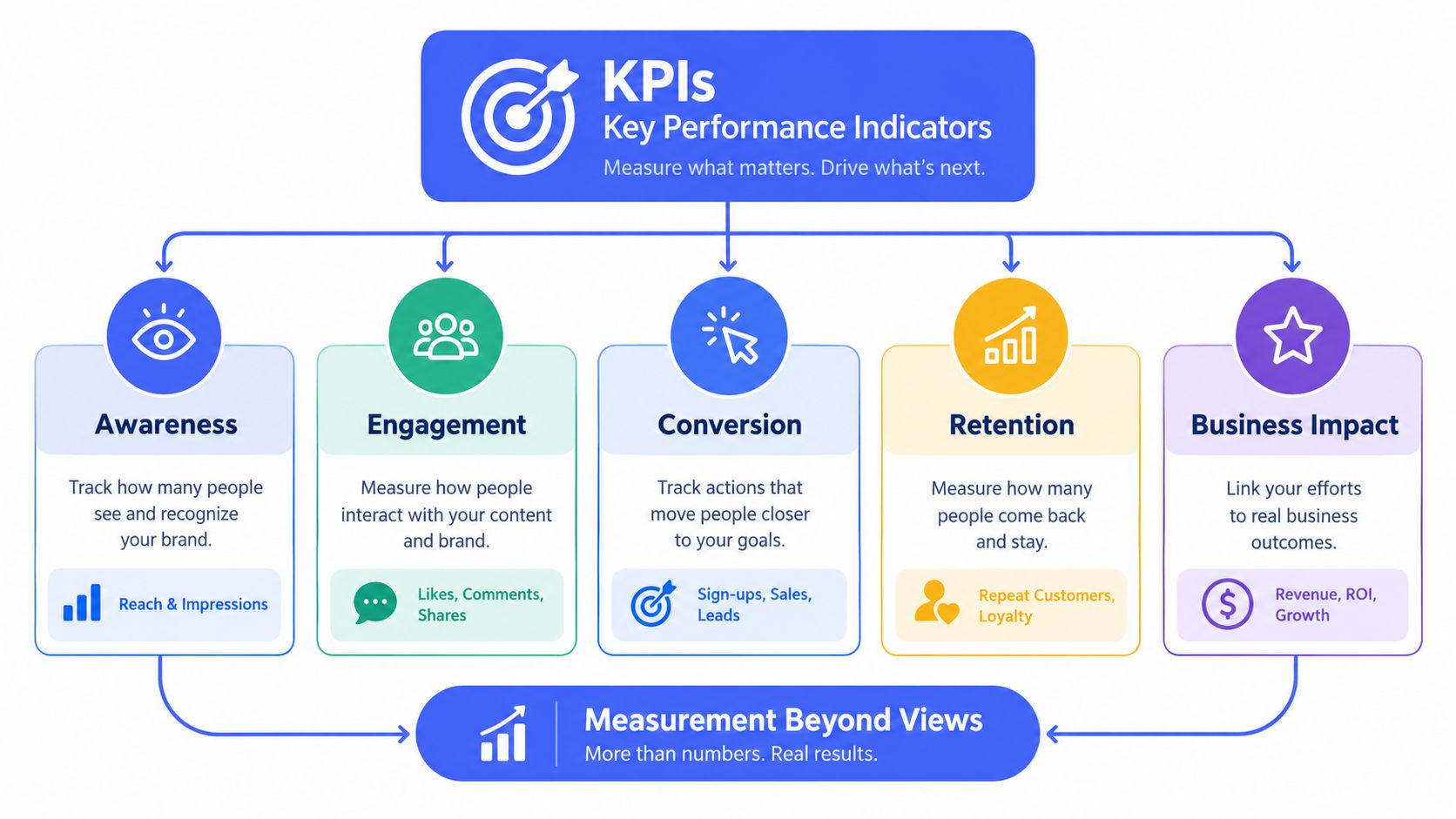
Views confirm distribution. They do not show whether the opening held attention, the offer made sense, or Shorts influenced a later conversion. Set the measurement plan around the role Shorts plays in the full-funnel brief.
At the creative layer, track hold rate, average percentage viewed, replays or looping, swipe-away behavior, and engagement quality. Use the retention quality gates outlined in the creative playbook. Adjust expectations for runtime, audience, and objective instead of applying one threshold to every asset.
At the channel layer, review Shorts-influenced sessions, branded search behavior, subscriber growth associated with Shorts exposure, movement into long-form viewing, and audience quality. These measures distinguish passive scrolling from a relationship that can support the next stage of the journey. Compare performance by audience, creative format, destination, and paid or organic exposure.
At the business layer, measure assisted conversions, view-through conversions, long-form retargeting outcomes, qualified site actions, and incremental reach against a long-form-only plan. Do not assign Shorts full credit for a last-click conversion if a later long-form pre-roll or search interaction carried the decision. Give each channel credit for its documented role.
Establish a reporting rhythm
A weekly creative scorecard should show each asset's hook, runtime, audience, hold pattern, average percentage viewed, comments, and next edit decision. Every asset needs a clear action: scale, revise, repurpose, or stop.
A monthly full-funnel review should connect exposure with movement across YouTube, search, site behavior, and conversion paths. Use GA4 engagement events for measurable site and embedded-video interactions, brand lift studies for upper-funnel questions, and consistent post-view windows of 1, 3, and 7 days when those windows match the buying cycle. For broader discoverability and channel structure, review video SEO practices.
The finance-ready question is direct: what did Shorts add that the existing long-form and paid social plan did not? That answer should guide the next quarter's budget, creative brief, and audience allocation.
Short Case Examples Across B2C and B2B
The supplied brief calls for representative case examples, but no verified case-study data is available for the skincare or SaaS scenarios described. A responsible budget review shouldn't present invented outcomes as evidence. Use the following as planning models, with placeholders replaced by your own measured results after testing.
A B2C skincare program might brief creator-led Shorts around one serum problem, such as application, texture, routine order, or a common misconception. The team would test multiple openings, monitor hold rate and product-page actions, then retarget engaged viewers with a longer routine explanation or offer-led creative. The winning pattern would be the combination of hook, proof, creator fit, and downstream action, not the highest raw view count.
A B2B payroll program could answer recurring small-business questions in a weekly series. Each Short would resolve one narrow issue, then route interested viewers toward a long-form product walkthrough, comparison video, or demo page. The audience pool would be evaluated by qualified sessions and demo behavior rather than by entertainment engagement alone.
Dimension | B2C skincare | B2B SaaS |
|---|---|---|
Primary brief | Demonstrate a visible product benefit | Answer a specific operational question |
Creative voice | Creator, routine, reaction, demonstration | Practitioner, expert, customer problem |
First destination | Product page or related routine video | Long-form explainer or demo page |
Core quality signal | Hold rate plus qualified product actions | Hold rate plus qualified business sessions |
Paid follow-up | Offer, review, or product proof | Retargeting into long-form and demo campaigns |
What to stop | Generic beauty montage without proof | Broad claims that avoid the buyer's actual question |
Planning principle: Copy the decision logic, not the surface style. A retail brand may need visual proof, while a B2B brand may need an answer that earns the next meeting.
Governance, Workflow, and Your 90-Day Scale-Up Plan
A serious Shorts program needs named owners. Assign a Shorts lead to manage the brief and backlog, an editor to protect retention, a creator-partnership owner to handle talent and disclosures, a paid lead to control amplification, and a brand guardian to review claims, identity, and risk.
The weekly workflow should move from ideation to scripting, production, edit review, approval, launch, and analysis. Keep approval gates narrow. Legal should review claims and regulated categories, brand should review identity and tone, and the paid lead should confirm destination, audience, and tracking before launch.
Days 1 to 30
Audit existing long-form footage, creator assets, product demonstrations, and customer questions. Define the funnel role, audience, destination, creative territories, approval requirements, and measurement plan. Ship a pilot batch of 8 to 12 Shorts, then review retention and action signals at the individual-asset level.
Create a naming convention that records the hook, creator, product, audience, objective, and edit version. Without this discipline, the team won't know which variable produced the result.
Days 31 to 60
Test the handoff from organic winners to paid variations. Keep the strongest concepts, but adapt openings, CTAs, captions, and landing destinations for the paid objective. Onboard one or two creators whose audience and communication style match the brief, rather than creators with large reach alone.
Document the production pattern that holds above the relevant benchmark. Teams using AI for transcription, rough cuts, caption variants, or idea clustering should still use content workflows that combine AI with human review. Automation can increase throughput, but a human must approve claims, context, pacing, and brand safety.
Days 61 to 90
Scale the ads that have earned more budget through creative evidence. Connect Shorts audiences to long-form YouTube and Search retargeting, then compare the combined path with your existing media approach. Publish a governance document covering creator rights, disclosures, music, claims, localization, file specifications, naming, approvals, and retirement rules.
Your channel team should also maintain the relationship between Shorts and owned YouTube content. YouTube account management can support the channel-side work of organizing, publishing, optimizing, and connecting short-form clips with longer videos.
Review the program quarterly against five questions:
Business fit: Is Shorts still serving a defined funnel role?
Creative health: Which hooks, formats, creators, and proof points retain attention?
Audience quality: Are viewers moving into meaningful site, search, or long-form actions?
Operational control: Can the team produce and approve content without brand drift?
Budget efficiency: Does Shorts add incremental reach or conversion value beyond existing channels?
Busylike provides vertical video production, paid video advertising, and YouTube channel management for brands connecting Shorts with long-form, CTV, and social campaigns. Visit Busylike to discuss a Shorts program with a defined brief, production system, and measurement plan before committing the next quarter's budget.


