
Advertising in Netflix: The Complete Brand Strategy Guide

Updated: Aug 13
Popular advice says Netflix advertising is just premium awareness with a streaming logo on it. That's too simple. In practice, advertising in Netflix works best as a selective complement to YouTube and social CTV, especially when the brief is to buy attention in a non-skippable environment and then let creator-led or social retargeting capture downstream demand.
That framing matters because Netflix doesn't behave like an open, highly granular social platform. It offers a curated viewing context, but it asks for more from the creative and less from the targeting team. For brands that need broad reach, cultural relevance, and measurable lift without pretending every impression can be micro-targeted, Netflix deserves a serious seat in the plan.

Table of Contents
How Netflix Built an Advertising Business From Scratch - The scale story is already real - The infrastructure shift matters more than the headline number
Ad Formats and Buying Models Available to Brands - What the buying path looks like
Targeting and Measurement Capabilities Compared to Other Channels - Where Netflix is tight, and where it's still catching up - What the new CAPI layer changes
Creative Strategy for a Premium and Contextual Environment - Build for the title, not just the screen - Production quality is part of the media buy
Cost Considerations and Steps to Launch Your First Campaign - Start with a narrow role in the mix - Make the test answer a real business question
Why Advertising in Netflix Is Not Just Another CTV Buy
Netflix is often lumped into the same bucket as every other connected TV channel, but that misses the strategic difference. The platform's value isn't just that it reaches a big screen. It's that it creates a high-attention, low-clutter, non-skippable environment where creative quality and contextual fit matter more than broad, platform-style targeting.
That changes how CMOs should think about the channel. Netflix is rarely the right place to chase the same audience logic you'd use in social. It's better treated as a selective demand lever, a place to create strong branded exposure, then extend that exposure with creator-led content, paid social, or search retargeting once interest has been sparked.
Practical rule: If your media plan depends on narrow audience control, heavy sequential messaging, or constant iteration by micro-segment, Netflix will feel constrained. If your plan needs premium attention and a clean brand context, it starts to make more sense.
The strongest Netflix buys usually sit beside YouTube and social CTV, not instead of them. YouTube is still the workhorse for flexible reach and faster testing, while social gives you rapid audience feedback and downstream retargeting paths. Netflix can make the opening impression feel more premium, but it usually needs another channel to convert that attention into lower-funnel action.
For teams working through measurement design, paid media measurement tips is a useful reference because the same discipline applies here. The question isn't whether Netflix can create attention, it's how you prove that attention is worth buying in a broader video mix.
How Netflix Built an Advertising Business From Scratch
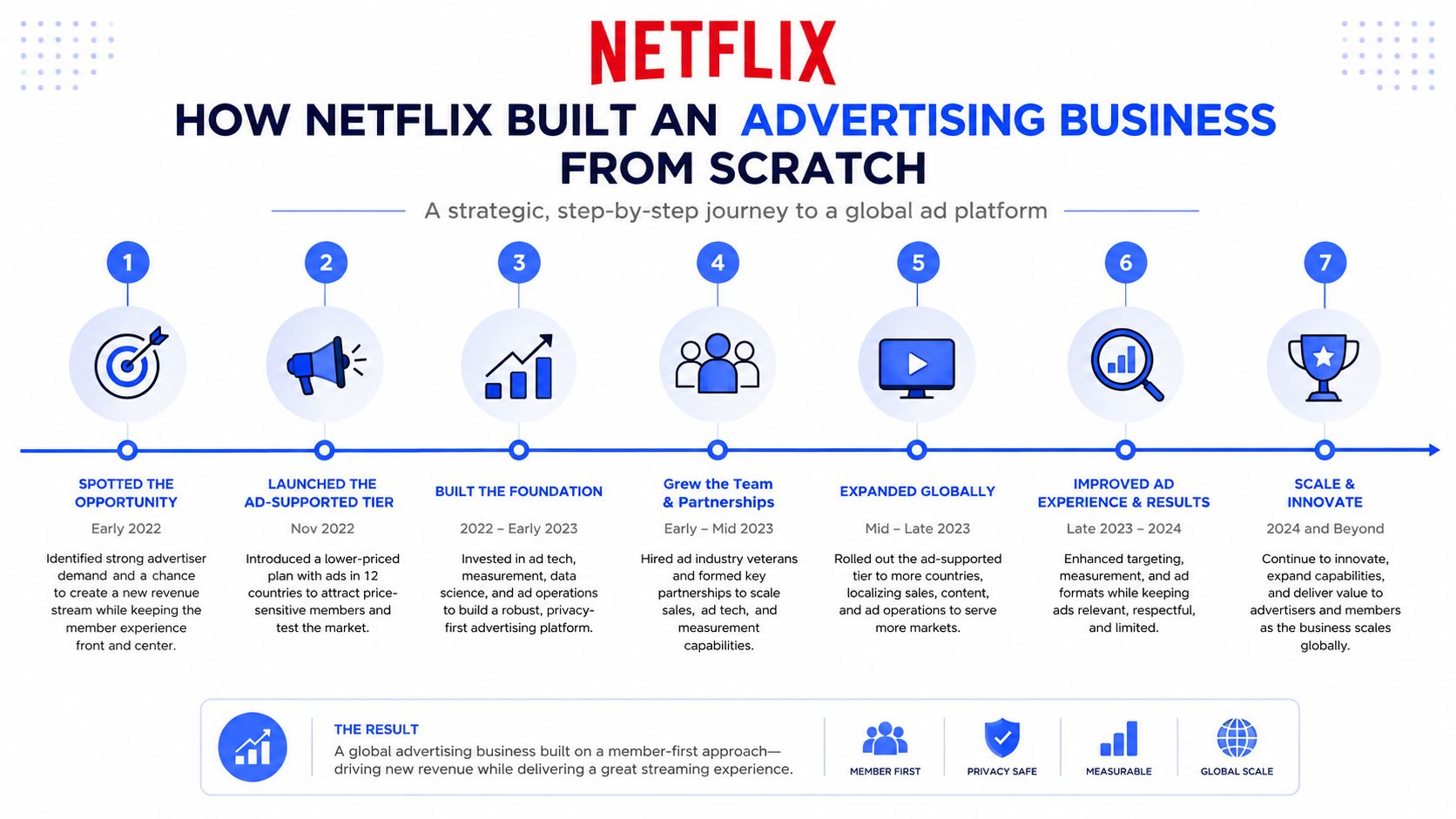
Netflix launched its advertising business in November 2022, starting with a Microsoft-powered setup and a relatively narrow buying path. Since then, it has built a broader ad system around its own infrastructure, which says a lot about how seriously the company treats the category. Netflix integrated ads directly into its business model rather than treating them as an afterthought.
The scale story is already real
By November 2025, Netflix said ads on the platform reached more than 190 million Monthly Active Viewers (MAVs) globally, and in 2026 it said that number had grown to over 250 million monthly active viewers worldwide, a 31% increase in about six months, with MAV defined as members who watched at least one minute of ads in a month, multiplied by estimated household co-viewing. That puts the channel well past experiment status and into the realm of a global media product with meaningful reach. Netflix's ad business update
Revenue shows the same direction. Statista estimated Netflix's advertising-related gains at about $0.5 billion in 2023, with projections rising to nearly $4 billion by 2027. Separately, Netflix's reported advertising expenses were $1.59 billion in 2022 and nearly $1.73 billion in 2023, an increase of over 9% year over year. More recent reporting says Netflix generated $1.5 billion in ad revenue in 2025, roughly 3% of total revenue, and expected that figure to double in 2026. Netflix advertising market data
For media teams comparing channels, a practical note on AI media buying in connected TV is useful here because Netflix's growth has started to look less like a niche rollout and more like an operational buying environment.
The infrastructure shift matters more than the headline number
Netflix's ad stack has moved from partner-led serving to first-party infrastructure. After launching with Microsoft in 2022, Netflix built an in-house Ads Suite and now uses a server-side event pipeline that proxies ad events through Netflix, stores tracking metadata server-side, and sends only reference IDs in event tokens. The practical upside is tighter control over measurement, frequency capping, billing, and reporting, plus less payload complexity for the buying side. Netflix Ads Suite architecture overview
That infrastructure choice matters for planners because it signals intent and staying power. Platforms usually invest this heavily in first-party plumbing only when they expect the ad business to keep scaling. For a CMO, that means Netflix deserves the same level of scrutiny as any other premium media partner, with the same attention to control, measurement, and fit.
Ad Formats and Buying Models Available to Brands
Netflix's inventory has moved beyond the old assumption that it only offers standard video spots. Buyers now have a mix of classic placements and newer, more native opportunities, which means the channel can support both straightforward reach goals and more contextual brand plays. A useful way to think about the inventory is by where the ad appears and how well it fits the viewing moment.
What the buying path looks like
Netflix's newest measurement layer is its own Conversion API (CAPI), a server-side attribution system Netflix describes as infrastructure for proving outcomes and optimizing campaigns with real-time insights. In March 2026, Netflix also expanded audience activation through Amazon DSP and Yahoo DSP, with Amazon audiences built from shopping, streaming, and browsing signals, while Yahoo audiences were described as deterministic segments drawn from hundreds of millions of interest, behavioral, purchase, and life-stage signals. Netflix said early CAPI tests outperformed benchmarks by more than 75% across financial services, ed tech, and retail. Netflix CAPI and DSP expansion
For planners, that means the platform is no longer limited to one narrow route in. Some brands will still buy directly, some will route through DSPs, and others will use a hybrid approach depending on control, pacing, and measurement requirements. If you're building a first test, the most important decision is not only format, it's whether the campaign needs direct sponsorship-style control or broader programmatic flexibility. A helpful internal primer on that operational split is this overview of AI media buying agency workflows, especially if your team is comparing in-house and partner-managed buying.
Format | Placement | Best For |
|---|---|---|
Pre-roll | Before a title starts | Clean reach and brand introduction |
Mid-roll | Natural break inside content | Sustained attention and message retention |
Pause ads | When a viewer pauses playback | Contextual exposure without interrupting story flow |
Single-title sponsorships | Around a specific series or film | Cultural association and title alignment |
QR-code-enabled units | In-ad interactive layer | Second-screen actions and product follow-up |
Fandom-driven brand partnerships | Around talent, titles, or live moments | Cultural relevance and deeper brand fit |
The practical takeaway is simple. Netflix can now support a wider range of objectives, but the platform still rewards advertisers that respect the environment. It's not a place for lazy repurposing. It's a place for controlled, high-quality placements that match the viewing context.
Targeting and Measurement Capabilities Compared to Other Channels
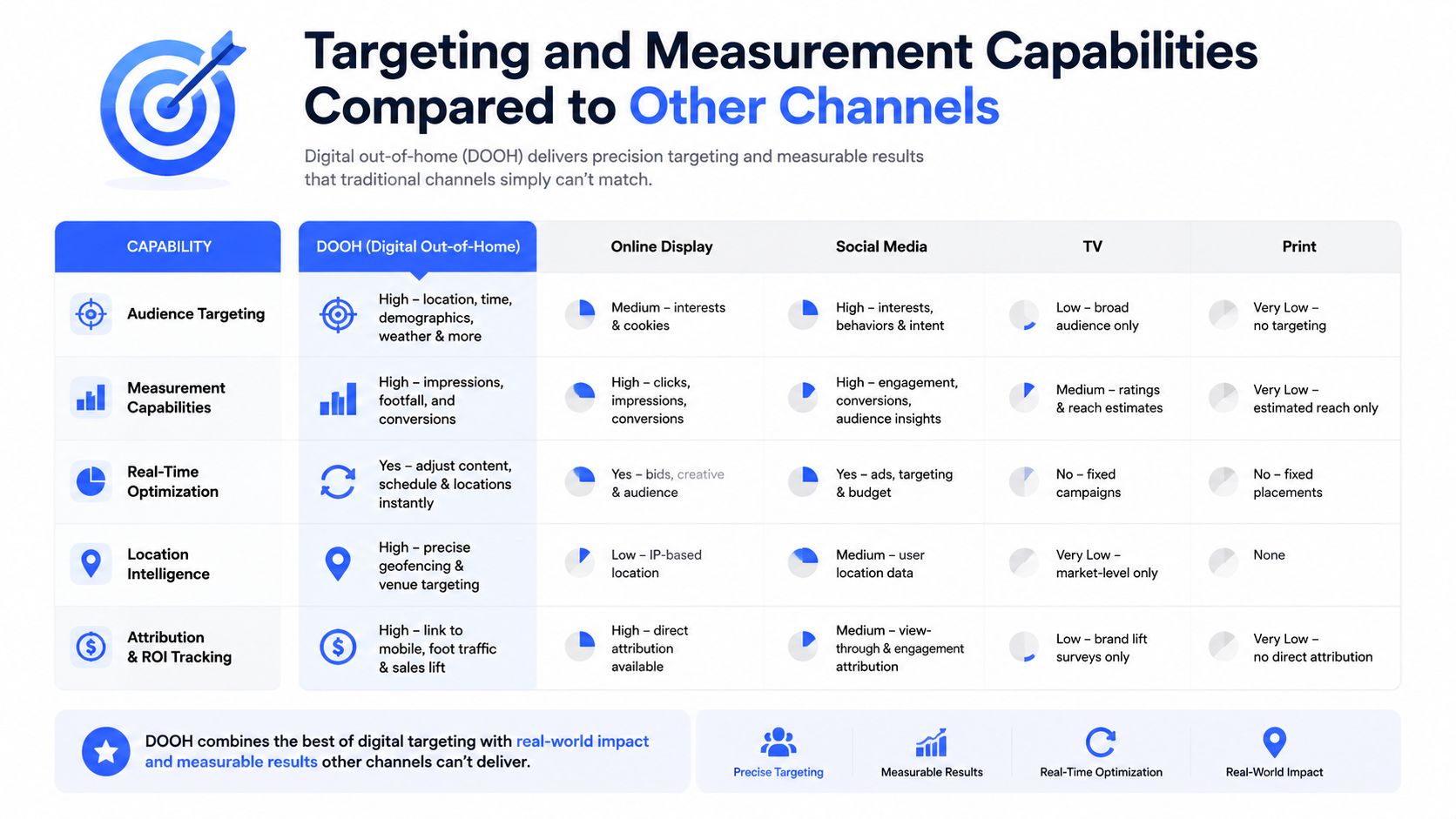
Netflix is stronger than most broadcasters and some CTV partners on contextual control, but it still isn't trying to be a social platform. Its targeting is built around first-party viewing signals, content adjacency, and market-level controls, while YouTube and paid social remain more flexible for audience precision, creative iteration, and rapid retargeting. That's the core comparison marketers need to internalize.
Where Netflix is tight, and where it's still catching up
Netflix's ad-supported tier has roughly 94 million monthly active users globally, and Netflix says ads are now available in 12 countries. The same help center also makes clear that ad experience and availability vary by plan, title, and market, which means advertisers don't yet get a perfectly uniform buying or reporting story everywhere. Netflix ad plan help center
That variability matters more than many buyers admit. If your team is used to the consistent audience structures of social platforms, Netflix can feel less predictable. If you're used to CTV, the platform feels more modern, but the reporting path is still evolving, especially when the goal is to understand downstream action instead of just exposure.
What the new CAPI layer changes
Netflix's Conversion API is the important signal here. It turns the platform into a more credible performance environment by connecting ad exposure to downstream signals in a server-side way. That doesn't make Netflix a direct-response machine, but it does move the channel closer to the measurement expectations many growth teams now bring to video.
The comparison with YouTube and social CTV is straightforward. YouTube still gives you broader audience tuning, more creative testing, and faster feedback loops. Social CTV, when paired with retargeting, is better for sequencing and action. Netflix's role is different, it's a premium environment that can strengthen the top of the funnel while now offering enough measurement to justify a more serious test against lower-funnel objectives.
Decision point: If your team can't define what downstream signal Netflix should influence, don't buy it yet. If you can define the role clearly, CAPI makes the channel far more defensible.
Creative Strategy for a Premium and Contextual Environment
The biggest mistake brands make on Netflix is using recycled TV spots as if the placement alone will do the work. Netflix rewards creative that feels native to the viewing moment, because the environment is premium, the ad load is light, and the audience is already in a focused mindset. That's why the channel is moving toward contextual association rather than generic impression buying.

Build for the title, not just the screen
Recent trade coverage points to Netflix pushing beyond standard pre-roll and mid-roll into pause ads, single-title sponsorships, QR-code-enabled units, and fandom-driven partnerships. That's a clear signal that the platform is rewarding brands that think in terms of story, title, talent, and cultural moment instead of only standard spot length. Netflix creative format trends
That doesn't mean every campaign needs a custom production. It does mean the creative team should ask whether the ad belongs in a title environment, a fandom environment, or a more straightforward reach environment. Some brands should build story-native concepts that echo the tone of a series or live moment. Others can still repurpose a TV asset, but only if the opening seconds are sharp and the brand cue is immediate.
Production quality is part of the media buy
Netflix's premium viewing context makes weak creative more visible, not less. If the spot feels noisy, generic, or disconnected from the content around it, the impression loses value quickly. Brands with stronger video systems usually approach Netflix with a specific production brief, not a recycled cutdown.
If your team needs support creating assets that fit premium streaming, Brand Content Production from Image Studio is one of several production options worth evaluating. The right partner here is less about flashy ideas and more about building a format that looks deliberate on a big screen and can still feed retargeting and search afterward.
A useful planning habit is to treat Netflix as a brand-context layer, then let other channels handle the demand capture. That's also why many teams keep their Netflix creative tightly aligned with broader advertising agency video strategy, so the story feels coherent across CTV, YouTube, and social.
Cost Considerations and Steps to Launch Your First Campaign
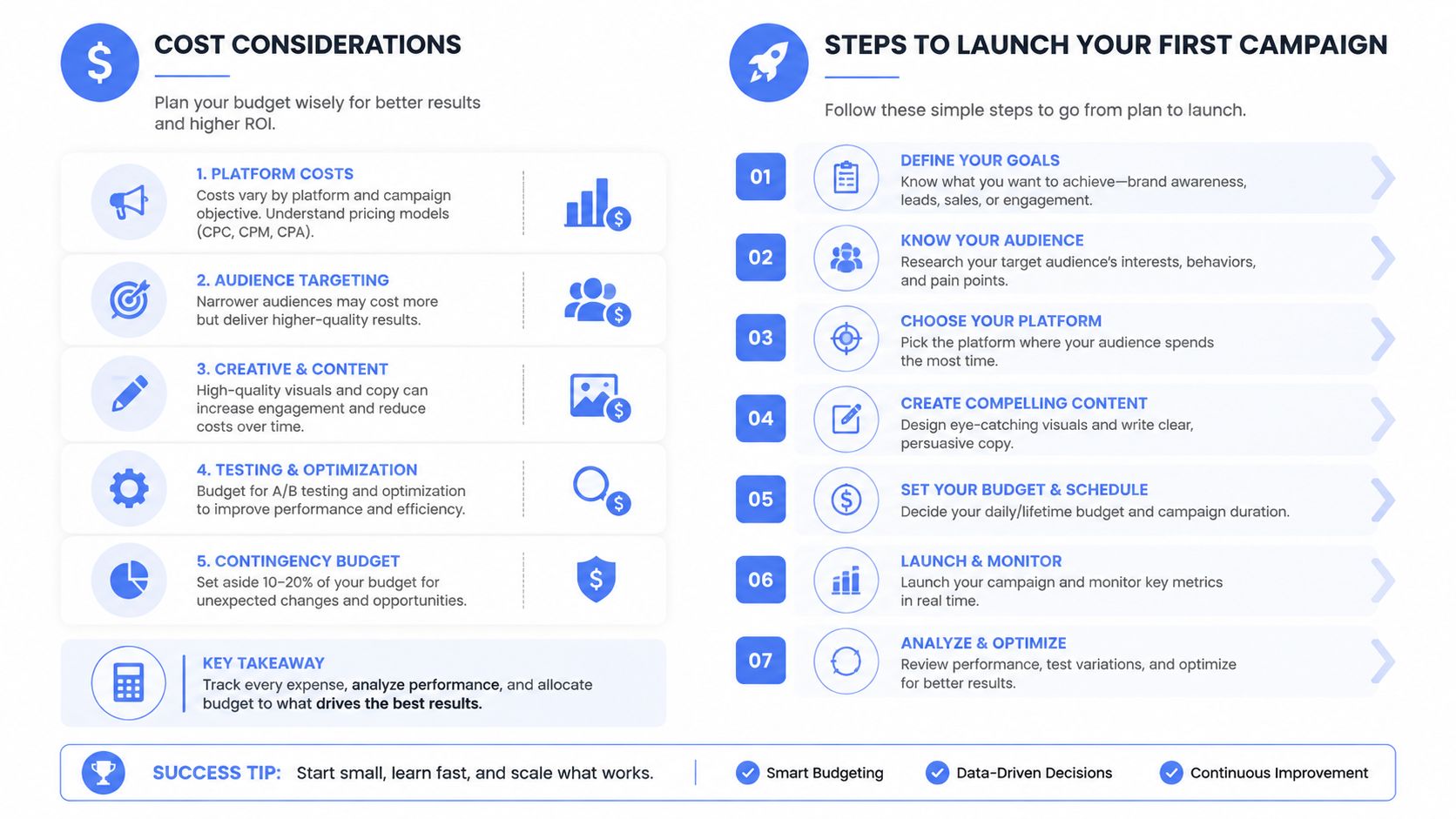
Netflix isn't usually the cheapest place to buy video, and that's not the point. The channel makes sense when the media plan needs premium attention, selective targeting, and a stronger brand context than lower-cost inventory can deliver. If your benchmark is pure efficiency, Netflix will often look expensive. If your benchmark is incremental influence in a high-quality environment, the equation changes.
Start with a narrow role in the mix
The best first campaigns are not broad platform tests. They answer one question, such as whether Netflix adds incremental reach beyond YouTube, whether a premium non-skippable environment lifts branded search, or whether title-adjacent creative drives stronger downstream response than a standard cut. That kind of test is more useful than trying to prove everything at once.
A practical launch path usually looks like this:
Define the job: Choose whether Netflix is there for reach extension, brand lift, or assisted demand.
Pick the right creative: Decide whether a TV cutdown is enough or whether the environment justifies a custom version.
Map the follow-on channel: Plan how creator content, paid social, or retargeting will capture the attention Netflix creates.
Set the measurement lens: Make sure the team knows what success looks like before launch, not after.
Use the right partner support: Some teams can manage this internally, while others need agency help with trafficking, measurement, and pacing.
That partner decision matters more than many marketers expect. A media agency can help structure the buying side, but the creative and measurement choices still have to be owned internally. For a plain-English view of that role, what a media agency does is a useful reference when you're deciding what to keep in-house and what to outsource.
Make the test answer a real business question
Netflix works best when it's used as a selective complement to YouTube and social CTV, not as a stand-alone identity channel. Brands that pair Netflix exposure with creator-led storytelling or social retargeting usually have a cleaner path to downstream demand, because the premium impression creates context and the other channels create response.
That's the launch mindset I'd recommend to most CMOs. Buy Netflix when the creative can hold up, the measurement plan is credible, and the business question is specific enough to prove something useful.
Where Netflix Advertising Is Headed Next
The next phase of Netflix advertising will probably be shaped by two shifts, stronger first-party infrastructure and more formats that feel built for the platform. Netflix continues to expand its ad business and viewer reach, while trade coverage suggests ongoing investment in audience activation, attribution, and interactive inventory. Recent reporting from The Wall Street Journal has also pointed to Netflix pushing harder on the ad stack behind the scenes.
The strategic signal is clear. Netflix wants ads to feel more integrated with the viewing experience, which should create more opportunities around titles, live moments, and context-specific placements rather than a larger volume of standard video units. For media planners, that shifts the job from buying raw impressions to buying relevance, context, and measured influence.
A few practical implications stand out. Measurement will keep mattering more as Netflix strengthens its first-party stack. Creative teams will need to design for cultural fit, not just runtime. Buyers who already use YouTube and social CTV are likely to get the most value, because they can connect Netflix's premium attention to a broader performance path. That is where Netflix fits best, as a selective complement to channels that are already built for scale and response.

If you are evaluating whether Netflix belongs in your video mix, Busylike can help you map the role it should play alongside YouTube, CTV, and paid social, then build the creative and distribution plan around that role. Visit Busylike to talk through a video strategy that connects premium streaming placements to measurable demand.

