
Pinterest Video Marketing: A Practical Strategy Guide

Your team is probably already buying short-form video on Meta and TikTok, yet Pinterest is still treated as an organic side project. Meanwhile, competitors may be placing useful, product-led video in front of people who are actively planning what to buy. That gap matters because Pinterest isn't only a scrolling environment. It is a discovery system where a strong asset can continue earning attention after launch.
The right Pinterest video marketing strategy combines short paid creative, evergreen search intent, saves, assisted conversions, and disciplined measurement. It doesn't copy a TikTok playbook, and it doesn't judge success by last-click traffic alone. The recommendations below are designed for marketing teams that need an operational plan, not another list of generic content tips.
Table of Contents
Why Pinterest Video Belongs on Your 2026 Media Plan - The channel comparison marketers should use
Pinterest Video Ad Formats, Placements, and Specs - Match the placement to intent
Creative Best Practices for Vertical Short-Form Video - Build for the pause, not only the play
Targeting, Bidding, and Paid Media Strategy - A practical starting allocation
Measurement and KPIs Beyond Clicks - Connect platform events to business records
Production and Distribution Workflow - Build the asset in four controlled stages
Common Misconceptions and What the Data Actually Shows - The corrected operating stance
A 30-60-90 Day Plan to Launch Pinterest Video Marketing - Days 1 to 30, establish the foundation - Days 31 to 60, optimize what earns attention - Days 61 to 90, scale with incrementality
Why Pinterest Video Belongs on Your 2026 Media Plan
A shopper planning a renovation, trip, outfit, or purchase may discover your brand weeks before a search or site visit. Pinterest video gives that planning stage a measurable media role. Use it when your category depends on inspiration, comparison, product education, or visual proof. Home, beauty, fashion, food, travel, retail, and lifestyle products fit naturally, but the same logic applies to any offer people research before buying.
Pinterest reports that its community watches nearly 1 billion videos each day, including more than 900 million views on mobile devices. The platform also says users are 55% more likely to buy a product after watching a video about it, while video Pins can generate about 3x higher click-through rates than static images. These figures are compiled by Pinterest video marketing statistics compiled by Yans Media. They support a clear media decision: test video for discovery, consideration, and purchase intent, rather than evaluating it only as a reach format.
The platform also says its trends last 21% longer than trends on other social platforms. That supports evergreen and seasonal planning, but it does not guarantee extended performance for every asset. Give useful creative enough time to earn saves and repeat discovery. Judge it against qualified visits, branded search, assisted conversions, and later purchase behavior, not only launch-week traffic.
Planning rule: Assign Pinterest video an upper- and mid-funnel demand-generation role alongside Meta and TikTok. Set separate expectations for saves, qualified clicks, consideration, and assisted conversions instead of forcing Pinterest to match another platform's immediate-click performance.
The channel comparison marketers should use
The comparison below avoids invented CPM, save-rate, and conversion benchmarks. Those outcomes depend on category, audience, creative, auction conditions, and attribution. Establish account-specific baselines before increasing spend.
Metric | Pinterest Video | TikTok Ads | Instagram Reels Ads |
|---|---|---|---|
Primary user mindset | Planning, discovery, and repeat research | Entertainment and trend-led discovery | Social discovery and creator-led browsing |
Creative durability | Can support ongoing discovery and seasonal reuse | Often depends more heavily on trend and freshness | Usually benefits from frequent social-native refreshes |
Strongest role | Evergreen prospecting and demand generation | Broad attention and rapid creative testing | Reach, retargeting, and social proof |
Best creative signal | Saves, qualified clicks, and downstream consideration | Watch behavior, engagement, and conversion actions | Engagement, clicks, and conversion actions |
Strategic use | Add an intent-rich layer to existing video buying | Extend reach and test cultural relevance | Reinforce campaigns across the Meta ecosystem |
Keep Pinterest video in the media mix rather than replacing existing social video buys. Its distinct value appears when a product benefits from repeated discovery while people plan, compare, and save options. Build platform-specific edits and reporting rules. Teams developing a wider channel system can use this content strategy for creators on X to adapt creative to audience behavior instead of distributing identical cuts everywhere.
Pinterest Video Ad Formats, Placements, and Specs
Start with the format that gives your team the cleanest test: standard Video Ads. Pinterest supports MP4, MOV, and M4V files encoded with H.264 or H.265, with files up to 2 GB, a minimum duration of 4 seconds, and a maximum duration of 15 minutes, according to Pinterest ad specifications explained by Strike Social. Technical headroom doesn't mean you should fill it. Pinterest recommends 6 to 15 seconds for short video ads, which is the practical starting range for performance creative.
Choose the canvas based on placement and the job of the asset:
2:3 vertical is the safest default for standard feed inventory because it occupies meaningful screen space without requiring a full-screen execution.
9:16 vertical suits immersive, Idea Pin-style experiences and creative designed for mobile-first viewing.
1:1 square can work when product framing, catalog consistency, or cross-channel reuse matters.
The mobile video advertising guide from Busylike provides useful context for designing assets that survive mobile placement constraints. Apply the same discipline here: test the first frame, text legibility, crop safety, and load behavior before discussing scale.
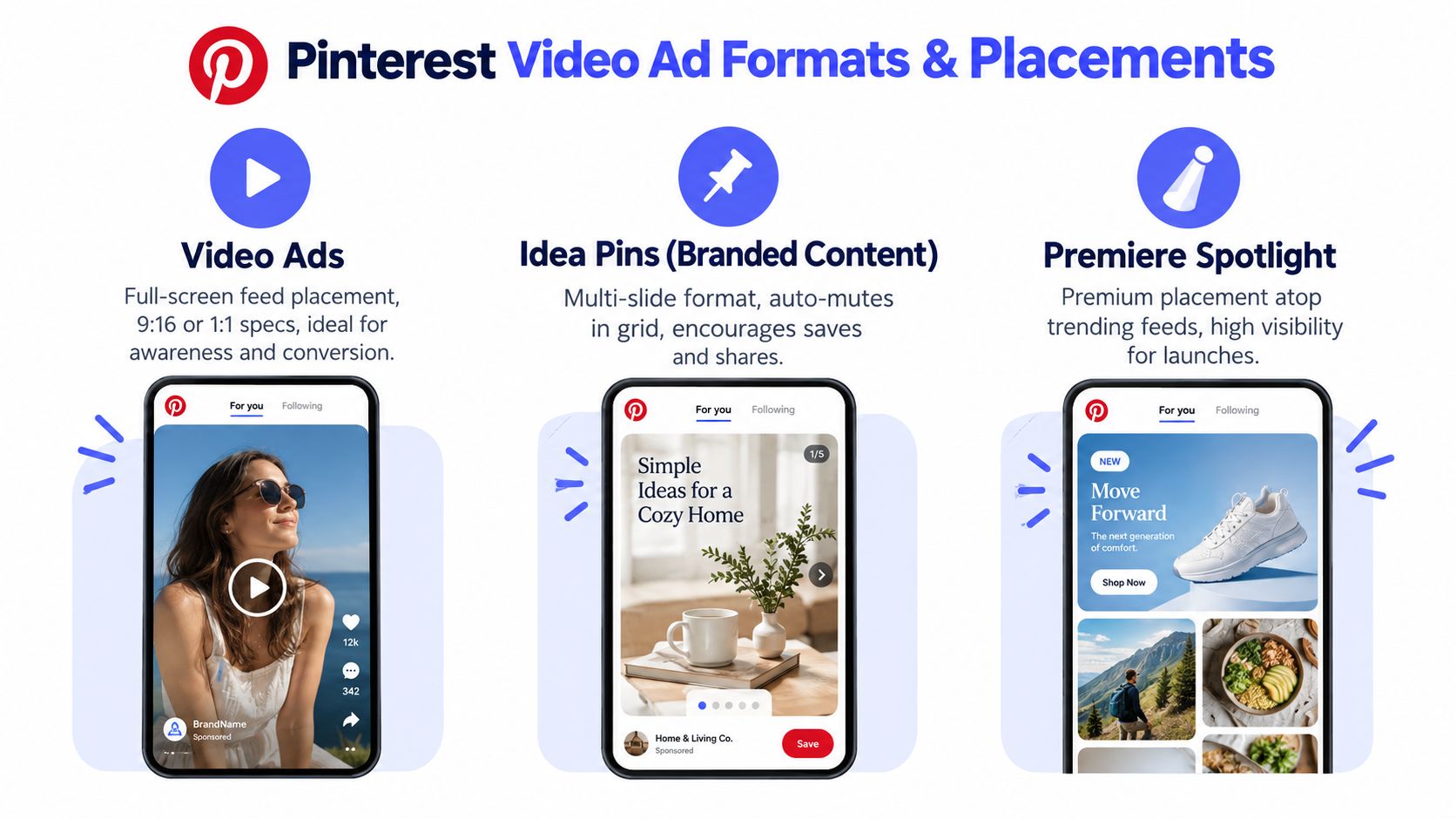
Match the placement to intent
Home Feed supports broad discovery and prospecting. It can introduce a category or product before the user has expressed a precise query, so use visual concepts with wide relevance.
Search Feed carries a clearer planning signal. Build creative around the language people use to find solutions, then align the pin title, description, landing page, and opening visual with that intent.
Related Pins sit beside adjacent ideas. They work well for comparison, styling, recipes, room solutions, and other formats where your product earns attention through context.
Shopping placements are closer to product consideration. Use product demonstrations, detail shots, and clear next actions rather than abstract brand films.
Pinterest also offers Idea Pins, including branded content built around a multi-page experience, and Premiere Spotlight, a premium launch placement designed for high visibility. Treat these as campaign-specific tools, not automatic upgrades. Standard Video Ads should receive the first test budget because they provide a simpler read on creative and audience performance. Reserve premium placements for launches or categories where broad visual exposure has a clear commercial role.
Creative Best Practices for Vertical Short-Form Video
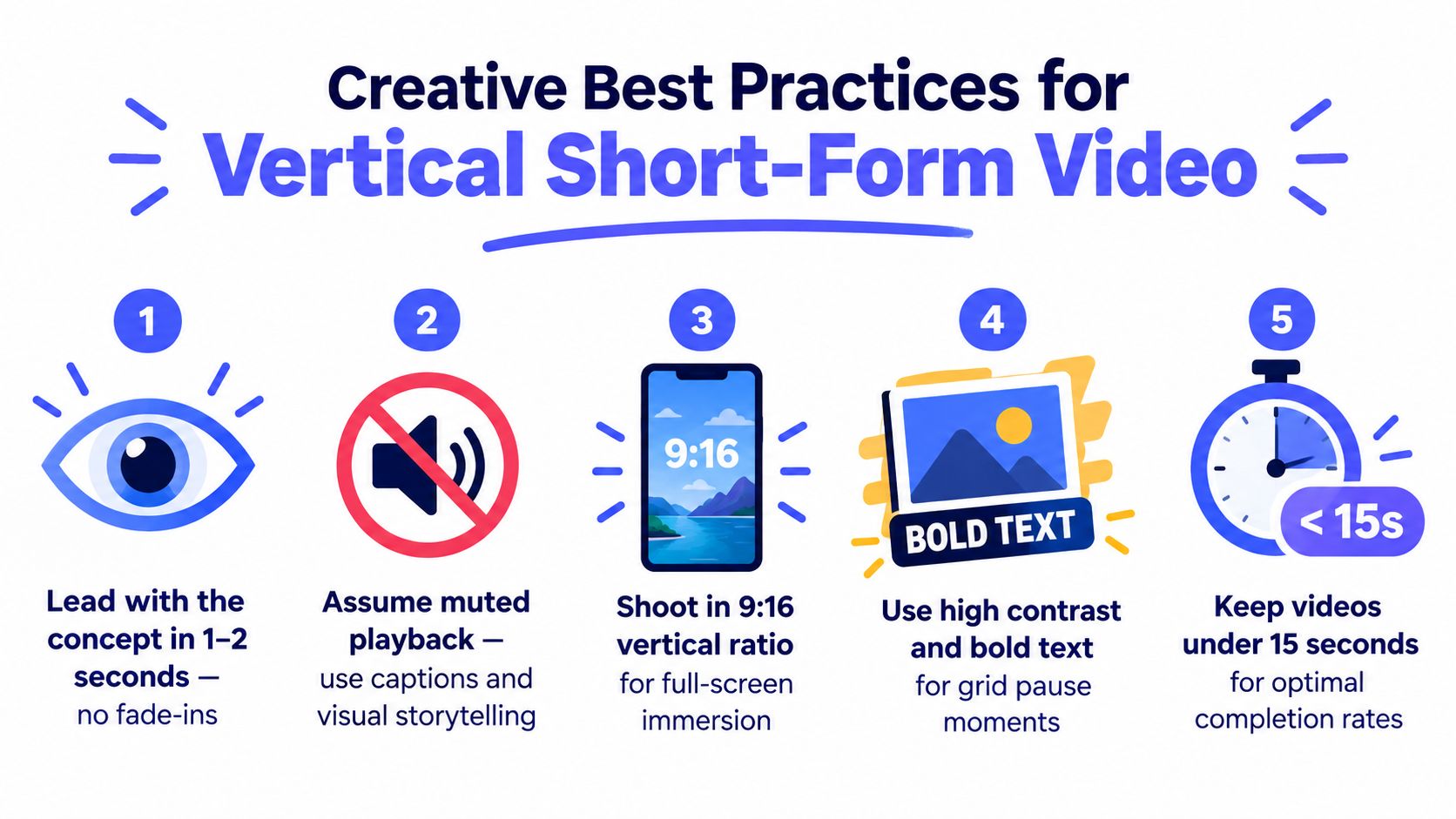
Pinterest creative must communicate before the viewer commits attention. Video can autoplay muted in feed and grid contexts, so the opening frame needs to make the subject obvious without relying on audio, a slow logo animation, or a trend reference.
Lead with the finished outcome. Show the plated dish, styled room, assembled outfit, or visible product result first. Then explain the transformation. A viewer should understand the promise within the first 1 to 2 seconds, even if they never turn on sound.
Build for the pause, not only the play
Use large, high-contrast on-screen text that remains readable in a small mobile preview. Keep the copy concrete: “Three ways to style this shelf” is stronger than “Transform this room.” Place the brand or product early, but make the first frame useful enough that it doesn't feel like an interruption.
Do | Don't |
|---|---|
Show the outcome immediately | Begin with a fade-in or empty establishing shot |
Use captions and visual instructions | Depend on voiceover to explain the offer |
Frame the product in context | Show an isolated product with no use case |
Use clean movement and clear sequencing | Copy fast jump cuts, lip-sync framing, or trend-dependent audio |
Create a 6 to 15 second cut when the idea is direct | Stretch a simple demonstration into a long edit |
Pinterest recommends short video lengths of 6 to 15 seconds, and the platform's reported attention performance supports testing concise edits first. Pinterest says its video ads can achieve a 3x higher view rate than the average social media platform, under the MRC standard, as reported in Pinterest's GroupM viewability guidance. That advantage only helps when the creative earns the initial pause and remains legible in the feed.
For shoppable campaigns, product appearance and action should connect naturally. Teams building a broader commerce content system may find this merch operating system video guide useful for thinking about product structure, tagging, and reuse. Your Pinterest edit should still stand on its own when the viewer doesn't click.
Use the video brand guidelines resource from Busylike to standardize typography, color, logo treatment, and safe areas before production begins. Consistency matters, but don't let brand rules suppress the visual clarity that makes a feed asset useful.
Targeting, Bidding, and Paid Media Strategy
Pinterest targeting works best when your team separates planning intent from generic social interest. Build prospecting audiences from relevant interests and keywords, then use first-party signals to sharpen subsequent tests. For lookalike or actalike audiences, seed from high-value converters or customers rather than all site visitors. A broad visitor pool tells the platform who browsed. A qualified customer pool tells it who created value.
Use video completion as a retargeting signal. Someone who watched only the opening deserves a different message from someone who watched the full asset. Create tiers around 10%, 50%, and 100% completion, then match the next creative to the demonstrated level of attention:
Early viewers: Reintroduce the product benefit with a clearer hook.
Midway viewers: Add proof, comparison, or a use-case explanation.
Completed viewers: Move toward product detail, offer, catalog, or conversion.
Choose the campaign objective according to the business question. Awareness is appropriate when you need qualified exposure and brand learning. Consideration or traffic works when the landing page provides deeper education. Conversions should be reserved for campaigns with reliable event signals and enough volume for optimization.
Start with maximum delivery to learn how Pinterest finds responsive inventory. Add stricter bid controls only after the account has established stable conversion behavior. Don't import a Meta target CPA or target ROAS assumption without checking event quality, attribution windows, and conversion volume.
A practical starting allocation
The table below is a planning framework, not a benchmark. Adjust it after your first creative and audience read.
Funnel Stage | Budget % | Bid Strategy | Primary Targeting |
|---|---|---|---|
Prospecting | 60% | Maximum delivery while learning | Interest, keyword, and qualified actalike audiences |
Mid-funnel retargeting | 30% | Conversion or traffic optimization based on event volume | Video completion tiers and engaged site visitors |
Branded closeout | 10% | Conversion-focused delivery | Brand searches, product audiences, and high-intent visitors |
Run placement controls during learning, but don't assume the Home Feed is inefficient before testing it with appropriate prospecting creative. Exclude placements only when performance data shows a quality problem. Refresh creative on a regular cadence, and rotate concepts rather than changing only the headline. A new color treatment won't fix a weak opening frame.
Measurement and KPIs Beyond Clicks
A Pinterest video campaign can look weak in last-click reporting while helping create demand that converts through branded search, direct visits, email, or sales-assisted paths. That doesn't justify vague reporting. It means the measurement model needs more than CPC.
Track four layers together:
Attention: view rate, completion rate, and viewability.
Discovery: saves, outbound clicks, and engaged sessions.
Consideration: assisted conversions, product views, and qualified lead actions.
Commercial impact: revenue, pipeline, customer quality, and incremental lift.
Pinterest has reported video viewability ranging from 54% to 99%, with an 82% average across a cross-market analysis of 42 campaigns in France, Spain, Germany, and the UK. The analysis counted a view when at least 50% of the video was in view for at least two seconds, as described in Pinterest video advertising analysis shared on LinkedIn. Use that definition when comparing viewability reports, because platform metrics are not interchangeable.
Don't set universal completion or click targets without account evidence. Instead, compare completion by length, opening hook, placement, audience, and landing-page intent. Saves deserve special attention because they indicate that the content has utility beyond the immediate session.
Connect platform events to business records
Verify Pinterest Tag events against GA4 and your CRM. Deduplicate conversions where possible, document attribution windows, and distinguish platform-reported conversions from independently observed conversions. For longer consideration cycles, compare exposed and holdout audiences over a defined period and inspect branded search, direct traffic, qualified leads, opportunity creation, and revenue quality.
A useful reporting rhythm is simple: review creative diagnostics weekly, evaluate channel allocation every two weeks, and summarize incrementality and pipeline monthly. The video distribution guide from Busylike offers a broader framework for connecting distribution choices to measurement.
Reporting rule: Never present raw reach as business impact. Pair exposure with an action, a quality signal, or a controlled comparison.
Translate video-attributed conversions into pipeline using a documented formula: attributed conversions × qualified conversion rate × average pipeline value. If you can't defend one of those inputs, label the result as directional and keep it separate from booked revenue.
Production and Distribution Workflow
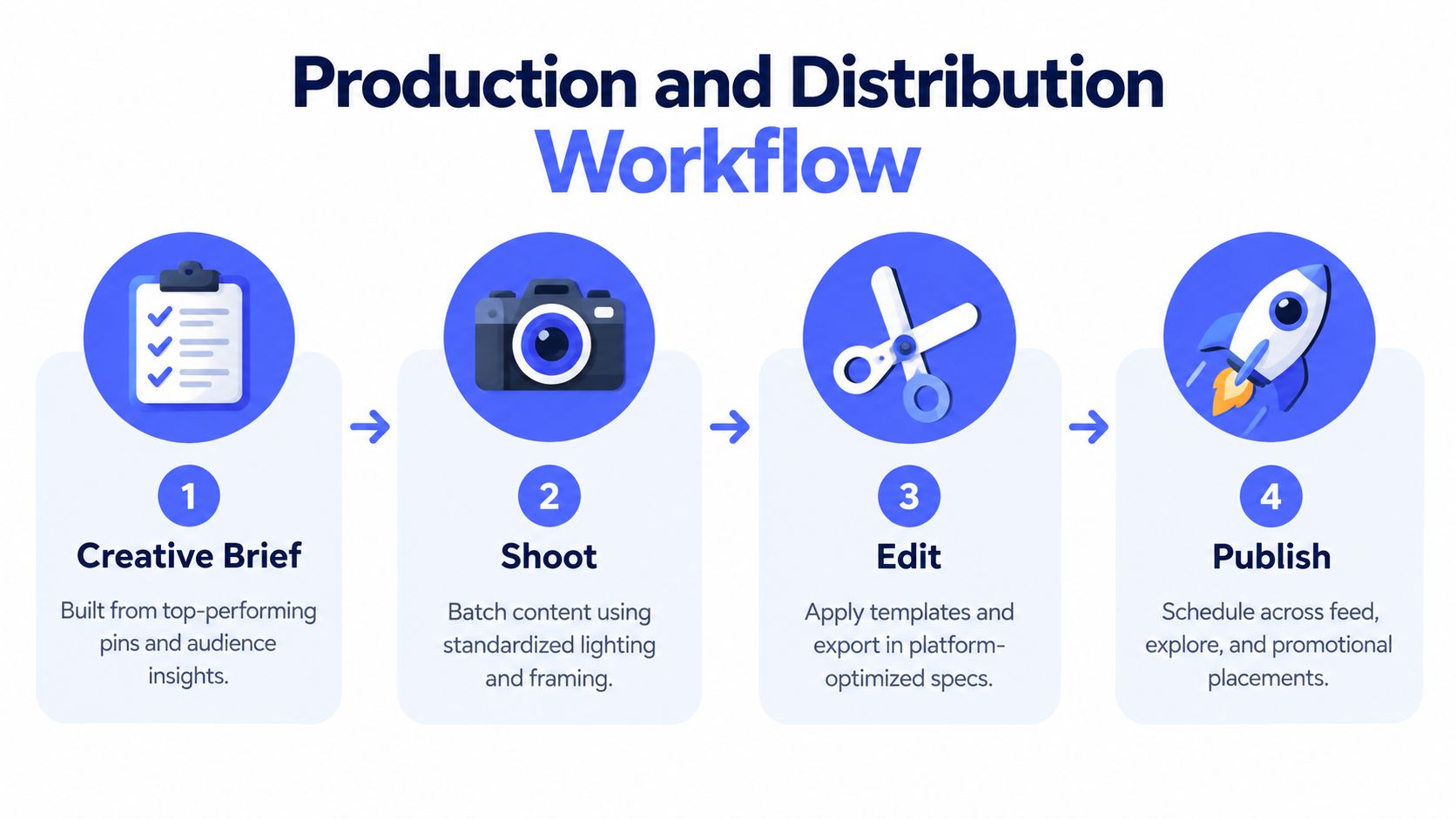
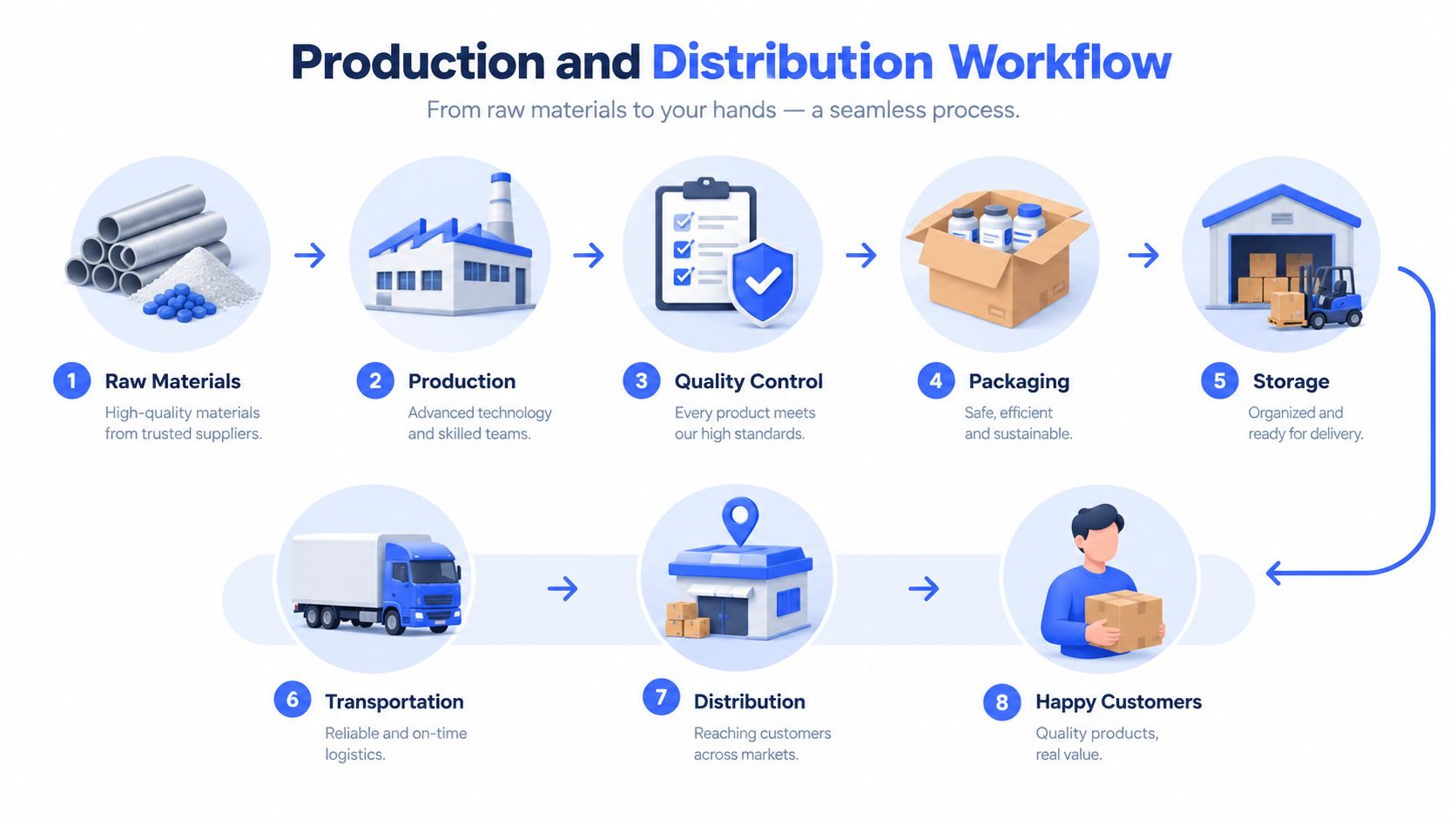
Pinterest video scales when production becomes a repeatable operating system. Start with evidence from your own account, not a creative team's favorite format. Review top-performing organic Pins, search terms, product questions, saves, and landing-page behavior, then turn those inputs into a brief with a clear audience, promise, proof point, and next action.
Build the asset in four controlled stages
Brief. Write three to five hooks for the same commercial idea. Keep the premise stable while changing the opening, visual order, text treatment, or proof. This creates a meaningful test instead of producing unrelated videos that can't teach the team anything.
Shoot. Use modular shot lists that capture product details, use cases, outcomes, hands, texture, and context. Record compositions that can be adapted to 1:1 and 2:3 placements, then capture dedicated 9:16 material when the experience requires full-screen vertical framing.
Edit and QA. Export a concise primary cut, then create variations with different first frames and text overlays. Check captions, logo visibility, crop safety, spelling, landing-page alignment, and brand-safety requirements before upload. Don't leave accessibility to the final hour.
Publish and tag. Distribute standard Video Ads through Ads Manager, use organic Idea Pin-style content for additional discovery, and attach consistent campaign, product, audience, and creative labels. Those labels make later comparisons possible across paid, owned, and repurposed video.
A practical cadence is to review performance every two weeks, promote winners into new audience tests, and refresh the base creative when the concept stops earning efficient attention. For teams that need faster iteration, this quick video production playbook from Viral.new offers useful process ideas around repeatable short-form output.
Build a library rather than a single hero film. One shoot should yield outcome-first edits, detail cuts, comparison versions, seasonal openings, creator variations, and landing-page-specific versions. That approach lowers the cost of learning and gives media buyers more than one lever to pull when performance changes.
Common Misconceptions and What the Data Actually Shows
Treating Pinterest as a smaller version of another social platform leads to weak creative and incomplete reporting. Pinterest combines visual discovery, planning behavior, search context, and repeat exposure. Build the media plan around those mechanics, then judge the channel by commercial progress rather than reactions alone.
Myth | What Data Actually Shows | Operating Implication |
|---|---|---|
Pinterest is only for DIY and recipes | Pinterest video reaches a large daily viewing audience and supports product discovery | Test categories where visual planning influences consideration |
Autoplay is wasteful | Pinterest reports strong video view-rate performance against the social average | Design the first frame and muted experience deliberately |
Longer videos communicate more value | Pinterest recommends short paid video lengths of 6 to 15 seconds | Lead with a concise cut, then test longer versions when the idea needs depth |
Pinterest can't support commercial measurement | The platform reports purchase-intent and click-through advantages for video | Connect saves and views to Tag, analytics, CRM, and incrementality work |
TikTok edits can be uploaded unchanged | Feed proportions and discovery behavior differ by platform | Reframe, resize, rewrite overlays, and rebuild the opening for Pinterest |
The case for Pinterest video is strong, but the evidence does not guarantee that every brand or asset will outperform other channels. Pinterest's reported 55% higher purchase likelihood after product video exposure and approximately 3x higher click-through rate for video Pins versus static images are platform-reported figures summarized by Yans Media's Pinterest video statistics reference. Use those figures to justify controlled testing, not to forecast account results.
The corrected operating stance
Buy Pinterest when your audience researches visually and your team can produce useful creative that stays relevant beyond the launch window. Skip generic repurposing. Use source footage, then rebuild the framing, copy, opening, and pacing for Pinterest's feed and search environment.
Measure more than engagement rate. A save can signal future commercial value when the content connects to a product, audience, or later conversion path. Without that connection, it is only an attention signal. Configure the account and analytics stack to separate views and saves from qualified visits, product interest, and conversions.
Apply the same discipline to testing. Compare concepts by audience quality and downstream behavior, not by the cheapest view. Keep winners that generate useful discovery and measurable demand, and cut assets that attract attention without progressing users toward the business outcome.
A 30-60-90 Day Plan to Launch Pinterest Video Marketing
A marketing director should be able to assign this rollout without creating a new department. Give one owner responsibility for media, one for creative, and one for analytics. Require a weekly decision log that records what changed, why it changed, and which evidence supports the next test.
Days 1 to 30, establish the foundation
Audit existing image Pins, search themes, landing pages, product feeds, and conversion events. Install and validate the Pinterest Tag and Conversions API, then confirm that key actions reach both the platform and your analytics stack.
Produce a first batch of vertical concepts in the platform's useful ratios. Build variations around outcome-first openings, product demonstrations, comparison angles, and customer questions. Launch a controlled test across standard Video Ads and relevant organic discovery formats, with a clear baseline for view rate, completion, saves, outbound clicks, and conversion quality.
The exit condition is not a particular number. It's a trustworthy measurement path and a creative set large enough to identify patterns.
Days 31 to 60, optimize what earns attention
Cut weak assets according to completion, saves, qualified clicks, and post-click behavior, not reach alone. Build actalike and interest clusters from first-party converters and engaged viewers, then separate early video viewers from completed viewers for retargeting.
Introduce new versions of winning concepts. Change one meaningful variable at a time, such as the first frame, product angle, proof point, text hierarchy, or call to action. For commerce brands, test catalog and shopping-adjacent retargeting only after the product data and event signals are reliable.
The exit condition is a shortlist of repeatable creative patterns and audience groups that produce useful downstream actions.
Days 61 to 90, scale with incrementality
Shift budget toward verified winners while keeping a controlled prospecting layer alive. Add broader reach objectives when the team can measure how exposure affects branded search, direct visits, qualified leads, and revenue. Use a holdout or geographic comparison where the audience and sales cycle make that design credible.
Publish a monthly summary that separates platform-attributed results, analytics-observed results, assisted activity, and incremental evidence. Keep owners accountable for decisions, not just dashboards.
Assignment for this week: Name the media owner, creative owner, and measurement owner. Approve the first creative brief, validate tracking, and schedule the initial review before the campaign launches.
Busylike helps brands plan, produce, distribute, and optimize video campaigns across social, YouTube, and CTV, including the creative and paid media work required for Pinterest video marketing. Visit Busylike to discuss a production and demand-generation system your team can put into market this quarter.
